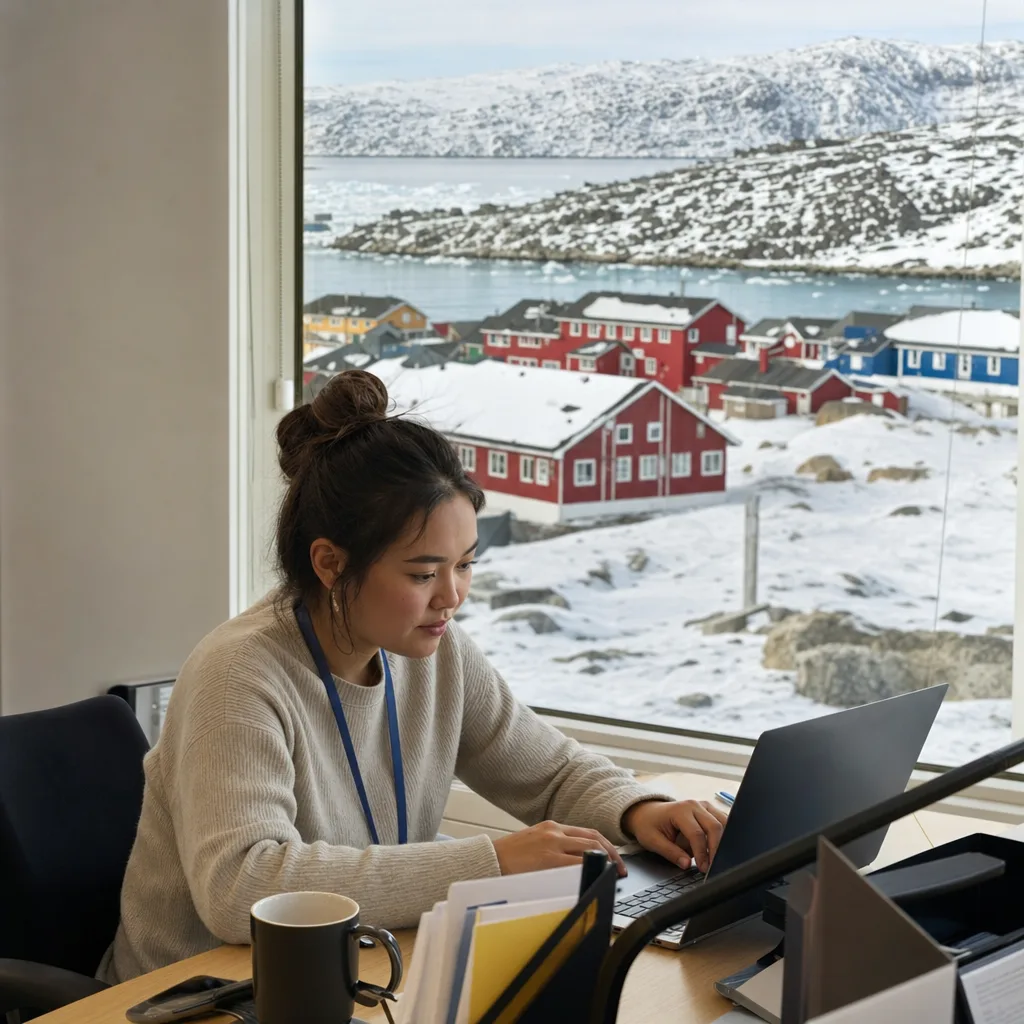

Work as a student in Greenland
Working as a student in Greenland can be a unique and rewarding experience that opens the door to a world of cultural discovery, personal challenges, and professional development opportunities. Greenland, with its magnificent nature and rich culture, offers a range of part-time jobs and internships that can enrich students' lives and careers. In this comprehensive article, we will explore the various aspects of having a student job in Greenland, from the dynamics of the job market and economic conditions to daily life, cultural integration, and practical steps to apply for a job. We will also discuss the specific opportunities available in larger cities like Nuuk, which are often the center of activity and development in Greenland.
The job market and career opportunities in Greenland
Greenland's job market, although smaller than in many other countries, is both dynamic and diverse, with an increasing demand for qualified workers in several sectors. The country's economy is primarily based on fishing, mining, tourism, and public administration, but there is also a growing sector in education and healthcare. As a student, you can find part-time jobs in several of these industries, allowing you to gain valuable work experience while studying.
Current job market and demand
The Greenlandic job market is currently experiencing a positive growth trend, particularly in the service, education, and healthcare sectors, which show promising future prospects. There is a constant demand for teachers and healthcare professionals, which can be an advantage if you are considering a career as, for example, a primary school teacher or nurse in Greenland. The tourism sector, which is important for Greenland's economy, also opens up more part-time positions, especially in the summer months when the number of visitors increases significantly.
Job opportunities for students in Greenland can vary depending on the season and location. In cities like Nuuk, which is Greenland's largest city and capital, there is a wide range of student jobs in Greenland within retail, restaurants, and administrative roles in public institutions. With the right approach, it is possible to find a student position that not only fits your schedule but also allows you to immerse yourself in the unique Greenlandic culture.
Qualifications and educational requirements
When considering applying for a part-time job or internship in Greenland as a student, it is important to be aware of the necessary qualifications and educational requirements, which may differ from those you are used to in Denmark. Although some jobs do not require extensive formal qualifications, there may be a need for specific training or certification depending on the position.
Necessary education and certifications
For many of the practical job opportunities offered to students, no specific education is required, but for other more specialized roles, some form of formal education or certification may be necessary. For example, if you are seeking a position as a healthcare assistant or teaching assistant, you may benefit from previous experiences in similar roles in Denmark or undergo local training to acquire the necessary knowledge.
In Greenland, practical experience is also highly valued, and for many employers, it can be just as important as formal qualifications. For students wishing to work as teachers or educators, it is often essential to have a relevant educational background or to be pursuing such studies. Many educational institutions in Greenland also offer courses and certifications that can help qualify you for these roles.
Language requirements and experience
Language plays a significant role in the job market in Greenland, where Greenlandic (kalaallisut) and Danish are both official languages. Depending on your workplace, there may be specific language requirements that need to be met. In many cases, employers will expect you to be proficient in Danish and have a basic understanding of Greenlandic, especially if you are working in a customer-facing role or in public services.
Experience is also an important factor when applying for jobs as a student in Greenland. Although many part-time jobs do not require extensive prior experience, it can be an advantage to have worked in similar environments previously. Internships can be an excellent way to gain this experience while building a network of contacts within your industry, which can be invaluable when seeking future job opportunities.
Specializations and career development
Working as a student in Greenland not only provides an opportunity to earn money and gain experience, but it can also be a springboard to a longer-term career. Many students who start in part-time jobs often find an interest in specializing in certain areas, which can lead to more permanent positions and career development.
Specializations in the education and healthcare sectors are particularly in demand. For example, if you work as support staff in a school or hospital, there are often opportunities for further education and certification that can lead to more responsible positions, which can also enhance your career prospects and salary over time.
In Greenland, there are also opportunities for career development within tourism and hospitality, especially in cities like Nuuk and Ilulissat, where tourism is thriving. Here, you can start with part-time positions in receptions or as tour guides, and with time and experience, these roles can evolve into leadership positions, providing you with a wide range of skills and experiences that can be used in many other contexts.
Salary, benefits, and economic conditions
Salary structures and economic conditions in Greenland can vary significantly from Danish standards, and it is important to understand these differences when considering a job as a student in Greenland. The economy here is influenced by many factors, including geographical area and the specific needs of individual sectors. Therefore, salaries may also reflect these unique conditions.
Salaries and pay ranges
Salaries for students working part-time in Greenland can vary depending on the sector and the specific position. The average salary for part-time jobs in Greenland is generally higher than in Denmark, partly due to the higher cost of living in the region. For example, a part-time worker in retail or hospitality can typically expect an hourly wage that is slightly higher than the Danish average.
Base salary and experience
The base salary for part-time jobs in Greenland can also be influenced by the experience you bring to the position. Employers are often more likely to offer higher wages to employees who have prior experience in the field. For example, an experienced barista or receptionist's salary may be higher than someone who is new to the industry.
It is also worth noting that the salary structure in Greenland often includes several components, such as basic hourly wages combined with allowances for overtime, weekend, and evening work. These allowances can significantly affect the total salary you receive as a student, and it is important to consider these factors when evaluating a job offer.
Allowances and bonuses
Many employers in Greenland offer allowances and bonuses as part of the compensation package for part-time employees. These may include location allowances for those working in remote areas, which is common in Greenland, where many communities are isolated and require extra incentives to attract labor.
Other allowances may include performance bonuses that reward employees for meeting specific goals or standards. It is important to discuss these options with your potential employer during the hiring process to ensure that you have a clear understanding of what your total compensation will look like.
Tax matters and financial benefits
Working in Greenland also means navigating a different tax system than the Danish one. Greenland's tax system is generally lower than in Denmark, but it is important to understand the specific tax rates and the financial benefits that may be available to part-time employees.
The Greenlandic tax rate can vary depending on your income, and it is important to be aware of how this can affect your net income. There are also various deductions and credits that can be applied, which can be beneficial for students working part-time.
Greenland also offers a range of financial benefits and support programs that may be available to students, including grants for housing and education. These programs can help alleviate some of the financial burdens of living and working in Greenland, and it is a good idea to explore these options when planning your finances.
Cost of living and savings
The cost of living in Greenland is generally higher than in Denmark, which can affect your ability to save money while working as a student. It is important to have a realistic understanding of these costs so that you can plan your finances effectively.
Housing expenses and daily costs
Housing expenses in Greenland can vary significantly depending on the location. In Nuuk, for example, housing prices are often higher due to limited availability and high demand. It is important to take these costs into account when planning your cost of living strategy.
Daily expenses, such as groceries, transportation, and entertainment, can also be higher than in Denmark, but these can be managed through careful budgeting. Many find it helpful to live in communities or share housing to reduce living costs and maximize their savings potential.
Savings opportunities
Despite the higher cost of living, there are still opportunities to save money while working as a student in Greenland. One of the key strategies is to have a clear budget plan that includes both income and expected expenses. This can help you identify areas where you can cut costs and increase your savings.
It is also worth exploring options for additional income sources, such as freelance work or project-based jobs that can fit your schedule as a student. With the right planning and discipline, you can build a healthy savings while enjoying the unique experiences Greenland has to offer.
Daily life and living in Greenland
Living and working as a student in Greenland provides a unique opportunity to immerse yourself in a remarkable culture and nature. The daily lifestyle here is different from that in Denmark and involves a mix of traditional Greenlandic customs and modern conveniences. For many, the transition to such a unique lifestyle can be both exciting and challenging, but with the right preparation, it can become an unforgettable experience.
Working conditions and work environment
The working conditions in Greenland are often characterized by a relaxed atmosphere and a strong sense of community. Many workplaces, especially in smaller communities, emphasize collaboration and a flat structure where all employees have the opportunity to contribute to decision-making processes.
Working hours and structure
Working hours can vary depending on the sector, but generally, there is a tendency to have a high degree of flexibility, which is ideal for students. Many part-time jobs offer shift work that can be adjusted to your class and study schedules, making it easier to balance work and education.
Flexibility is often an integral part of the work structure in Greenland, and many employers are understanding of the needs of students juggling both work and studies. This means that you can often find solutions that fit your individual needs and help you maintain a healthy work-life balance.
Workplace culture and colleagues
Greenland's workplace culture is often characterized by a warm and inclusive atmosphere. Colleagues often support each other, and there is a strong sense of community among employees. This is especially true in smaller towns and communities, where the workplace can also serve as a social hub.
For Danish students coming to Greenland, it may take some time to adapt to the cultural differences, but many quickly find strength in the strong sense of community. It is also an excellent opportunity to learn about local customs and traditions from your colleagues, which can further enrich your experience.
Housing and infrastructure
When it comes to housing and infrastructure, Greenland offers a mix of modern facilities and unique challenges. The housing market can be competitive, especially in larger cities, but there are various options for students looking for a place to stay during their time.
Housing options
In larger cities like Nuuk, there are often a variety of options for students seeking housing. These can include everything from dormitory rooms to shared apartments and rooms in private homes. It is important to start your housing search early, as demand can be high, especially at the beginning of the academic year.
For those who prefer a more independent living style, it may be possible to rent a small apartment, although this can be more expensive. Collaborating with classmates to share expenses can be a good way to make this financially sustainable.
Transportation and facilities
Transportation options in Greenland vary, but in urban areas like Nuuk, there is an efficient local bus system that makes it easy to get around. In smaller towns and settlements, it is more common to walk or bike, which fits well with the relaxed lifestyle.
Facilities such as shops, restaurants, and entertainment options can also vary depending on the location. In Nuuk, you will find most modern conveniences, while smaller towns offer a more limited but charming range of options. Regardless of where you live, you will find that the community is closely connected, making it easy to build social relationships and networks.
Family and social life
For students traveling to Greenland with family, or for those who wish to build social relationships, Greenland offers a rich and varied social life. The local community is often very welcoming and friendly, making it easy to settle in and create lasting friendships.
Childcare and schools
Childcare options are available in most cities and can include everything from daycare centers to more informal care arrangements in the community. The school system in Greenland resembles the Danish one in structure, but there is a strong emphasis on teaching both Greenlandic and Danish, which can be an advantage for children learning both languages.
Leisure activities and community life
Greenland offers a wide range of leisure activities, from traditional sports such as dog sledding and kayaking to modern fitness centers and clubs. Community life is often centered around cultural events and festivals that celebrate Greenlandic art, music, and history, providing students with ample opportunities to participate and become part of the local culture.
Language, culture, and integration
Moving to Greenland as a student also involves a journey into a rich and diverse cultural world, where language and integration play a central role. For many who choose to work as a student in Greenland, learning and adapting to the local culture is a significant part of the experience.
Linguistic conditions
Language in Greenland is a crucial part of both daily life and the workplace. Greenlandic, Danish, and English are the most commonly used languages, and each plays an important role depending on the context.
Danish, Greenlandic, and English
Danish and Greenlandic are the official languages in Greenland, and many workplaces require a certain proficiency in both. Greenlandic is particularly important in public roles and in local communities. For Danish students, it may be necessary to take Greenlandic classes to fully integrate.
English is also widely used in the tourism and business sectors, which can be an advantage if you work in these areas. However, it is always beneficial to have a basic understanding of Greenlandic to communicate effectively and build relationships.
Language courses and learning
There are many opportunities to learn Greenlandic in Greenland, including language courses at local schools and online resources. Many employers also support their employees in taking language courses as part of their professional development, which can be a great help for students looking to improve their language skills.
Cultural understanding and adaptation
Understanding and adapting to Greenlandic culture is a central part of living and working in Greenland as a student. Cultural understanding can help build stronger relationships and make your experience richer and more meaningful.
Greenlandic traditions and customs
Greenland has a rich history of traditions and customs that are still practiced today. These can include everything from national holidays and cultural festivals to daily customs and social norms. Participating in these events can provide a deeper understanding of Greenlandic culture and create emotional bonds with the community.
Cultural differences
There are, of course, cultural differences between Denmark and Greenland that students need to be aware of. From differences in social norms to variations in workplace culture, adaptation may require time and understanding. Being open and curious can make this transition easier and help create a harmonious integration into Greenlandic society.
Climate, nature, and quality of life
Greenland offers spectacular nature and a unique climate that can significantly impact the quality of life for those who choose to work as a student here. With its breathtaking beauty and extreme weather conditions, Greenland offers experiences that are unlike anything else.
The climate and seasons
The climate in Greenland is known for its extreme variations between the darkness of winter and the light of summer. Preparing for these shifts is crucial for thriving in the environment.
Weather conditions and temperatures
Greenland has an Arctic climate with cool summers and cold winters. Temperatures can vary significantly, and it is important to have the right clothing and equipment to adapt to the changing conditions. Good advice includes investing in warm, layered clothing and sturdy boots to handle both urban and mountainous areas.
Polar night and midnight sun
The polar night and midnight sun are unique phenomena in Greenland that affect daily routines. In winter, the long periods without sunlight can impact mood and energy levels, requiring strategies to cope with these periods, such as maintaining a regular routine, using light therapy, and participating in social activities.
Nature and recreational opportunities
Greenland's nature offers a wealth of activities for the adventurous. From kayaking among icebergs to hiking in the mountains, there is an abundance of opportunities to explore the magnificent nature.
Greenland's rich wildlife and unique landscapes also provide many opportunities for recreational activities and relaxation. Whether you are interested in outdoor life or cultural activities, there is always something to do. The nature here is both inspiring and calming, contributing to a high quality of life and a healthy, active lifestyle.
Application and practical steps
Once you have decided to work as a student in Greenland, it is important to understand the application process and the practical steps involved. From job searching to moving, it requires planning and preparation to ensure a smooth transition.
Job searching and application process
Job searching in Greenland may seem like a challenge, but with the right approach and resources, it is entirely possible to find a suitable part-time job or internship.
How to find jobs
There are several ways to find work as a student in Greenland. Online job portals like hireme.gl are a good place to start, but it is also important to network and build relationships with locals. Recruitment agencies and direct contact with potential employers can also be effective.
Application and CV
When applying for jobs, it is important to have a professional CV and cover letter that highlight your qualifications and experience. Preparing for interviews and understanding the expectations employers have can also make a significant difference.
Moving and practical preparations
Preparing to move to Greenland as a student involves a number of practical steps, from securing the necessary permits to finding housing and adapting to the new lifestyle.
Work permit and visa
Depending on your nationality, you may need a work permit or visa to work in Greenland. It is important to research and understand the applicable rules and requirements to ensure that you have the right documentation.
Moving assistance and onboarding
Many companies offer moving assistance and onboarding programs to ease the transition to Greenland. It can be beneficial to take advantage of these offers to make your move as smooth as possible.
Conclusion
Working as a student in Greenland can be a deeply rewarding experience, filled with both personal and professional benefits. Whether you are seeking a part-time position in hospitality, service, or wish to pursue a career in education or healthcare, Greenland offers a wealth of opportunities. With the right preparations and an open mindset, you can navigate the job market, integrate into the local culture, and enjoy the unique lifestyle that Greenland has to offer. By participating in this adventure, you will not only enrich your education but also create memories and experiences that last a lifetime.
By HireMe.gl
12 / 01 / 2026