

Engineering jobs in Greenland: types of positions, requirements, and daily life
16 March 2026
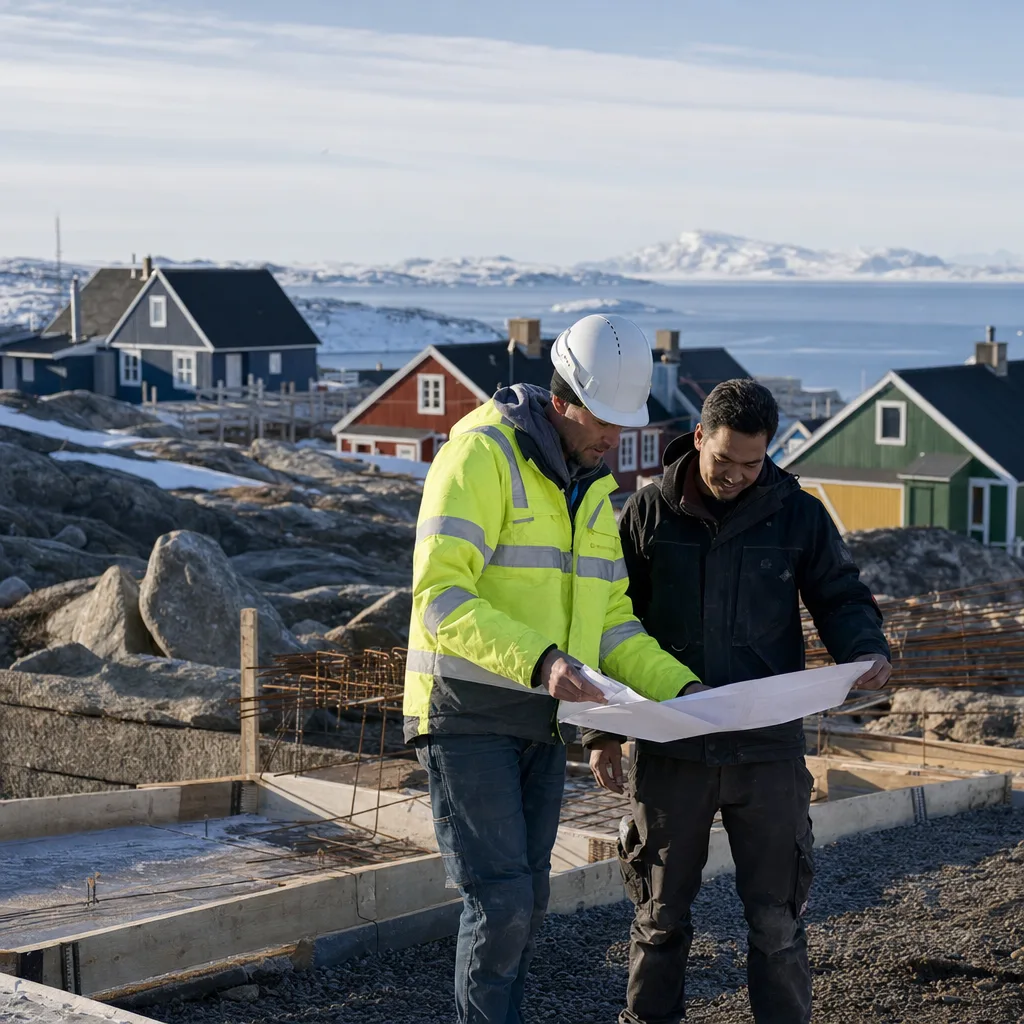
Engineer jobs in Greenland range from classic construction and facilities to the operation of utilities, ports, airports, and large public projects. Here you get a concrete overview of what types of positions are available across Nuuk, Sisimiut, Ilulissat, Qaqortoq, Aasiaat, etc., what employers typically look for, and what actually fills the day-to-day – both at work and outside.
What engineering positions do you typically find?
The market is smaller than in Denmark, but on the other hand broad: many engineers take on responsibility early and are close to decisions, operations, and users. Titles vary, but the tasks often recur.
- Construction and civil engineer / project manager: planning, procurement, supervision, and contract management on everything from residential construction to roads, ports, airport facilities, and public buildings. Logistics, weather conditions, and deliveries are a larger part of the work than many are used to.
- Structural engineer: sizing and quality assurance, often with a focus on robust solutions for arctic conditions, material deliveries, and execution in short seasons.
- HVAC/energy/mechanical engineer: heating and ventilation solutions, energy optimization, operational reliability, and troubleshooting – often with close collaboration with operational staff and craftsmen.
- Electrical/automation/SCADA: control and monitoring of technical facilities, redundancy and stable operation, as well as commissioning and documentation.
- Environmental and planning tasks: authority processing, investigations, and requirements for projects (e.g., noise, waste, sewage, environmental considerations) – often at the intersection of technology, law, and stakeholders.
- Geotechnics and surveying: investigations, mapping, and ground conditions, which in many cities require practical fieldwork and flexible planning.
In Nuuk, larger portfolios and coordination roles are seen more often, while smaller towns typically provide more all-round responsibility and close contact with executors and citizens.
Who hires engineers in Greenland?
A large part of engineering jobs in Greenland lies in the public sector or in companies with public ties, but there are also consultants, contractors, and industry-related workplaces.
- The Self-Government and municipalities: construction projects, planning, authority, operation, and maintenance.
- The healthcare sector and public institutions: technical operations, renovations, and new construction (often in collaboration with external consultants).
- Utilities and infrastructure: water, heating, electricity, waste, port and airport-related tasks – here, operations and preparedness are significant.
- Consulting engineering firms and contractors: design, supervision, project management, and execution.
If you want to get an idea of who is active right now, you can also look at companies in Greenland and see which employers are posting positions.
Requirements, authorization, and what employers actually ask about
Formal requirements depend on the role, but there are some recurring themes in recruitment:
- Education and documentation: engineering degree (diploma/civil) and preferably clear documentation of projects, responsibilities, and results.
- Experience with procurement and contracts: especially for public projects, experience with procurement materials, supervision, change management, and quality assurance is attractive.
- Safety, operations, and preparedness: in technical operations, call-outs, winter preparedness, and critical infrastructure can be a reality.
- Language: Danish is used in many places in writing and meetings, while Greenlandic is a clear advantage in dialogue with citizens and local actors. English may be relevant in international collaborations. The most important thing is that you can communicate clearly and respectfully in a small organization.
- Driver's license and travel readiness: may be necessary for supervision and field tasks, also between cities/locations.
Some functions may involve rules/authorizations (e.g., in the electrical field or specific safety requirements). It varies from employer to employer, so read the posting carefully and ask specific questions in the conversation.
Everyday life: projects, distances, and seasons
What makes engineering work in Greenland different is not only the climate – it is the logistics and the framework:
- Planning according to deliveries: materials and equipment come by ship or plane, and schedules are affected by weather conditions. Risk and backup plans are not “nice to have,” but part of the basic work.
- Short execution windows: many construction tasks are squeezed into seasons where you can pour, dig, and install. This can lead to intense periods.
- Close collaboration: you often work closely with contractors, operations, authorities, and users. In smaller towns, people know each other – this can make decisions faster but also demands decency and relationships.
- Traveling for work: meetings, supervision, and commissioning may require travel between Nuuk, Sisimiut, Ilulissat, Qaqortoq, Aasiaat, etc. Flight schedules and accommodation are part of everyday logistics.
If you also look more broadly at work in Greenland, it is worth reading the guide to working in Greenland, which covers frameworks such as contract conditions, culture, and practical issues.
Salary, housing, and terms: what you need to clarify before you say yes
Salary and terms depend on the employer, collective agreement, responsibility, and location, so it does not make sense to promise fixed amounts. On the other hand, there are some very concrete things you should get answers to:
- Housing: recruited employees may be offered free or assigned housing in some positions, but this varies greatly. Ask early: type of housing, rent, deposit, furnishing, and how long the agreement lasts.
- Travel: clarification of relocation, ticket arrangements, business trips, and any home visits.
- Tax and deductions: the tax system and practices may differ from what you know. Get it clearly written in your contract what the employer pays and what you are responsible for.
- Working hours and on-call duty: especially in operations and infrastructure, call-outs may occur. Get compensation and frameworks described.
Also consider the social and practical: leisure life, dark season/light nights, distance to family, and what you need in an everyday life where the local community matters more than in a big city.
A good checklist before moving can be found in What you need to know when moving to Greenland for work.
How to get started (without wasting time)
- Choose direction: are you more into design and procurement, or operations and commissioning? Write it clearly in your CV and application.
- Make your experience “arctic-readable”: highlight responsibilities, decisions, logistics, risk management, supervision, and collaboration across – not just software and calculations.
- Ask about the frameworks: housing, travel, duty, onboarding, and who is responsible for what when something goes wrong in the middle of a storm.
- Be flexible on title: positions may be called project manager, consultant, engineer, coordinator, or operations manager, even if the tasks match your profile.
You can see all available positions in Greenland on HireMe.gl and filter by engineering-related roles and locations.