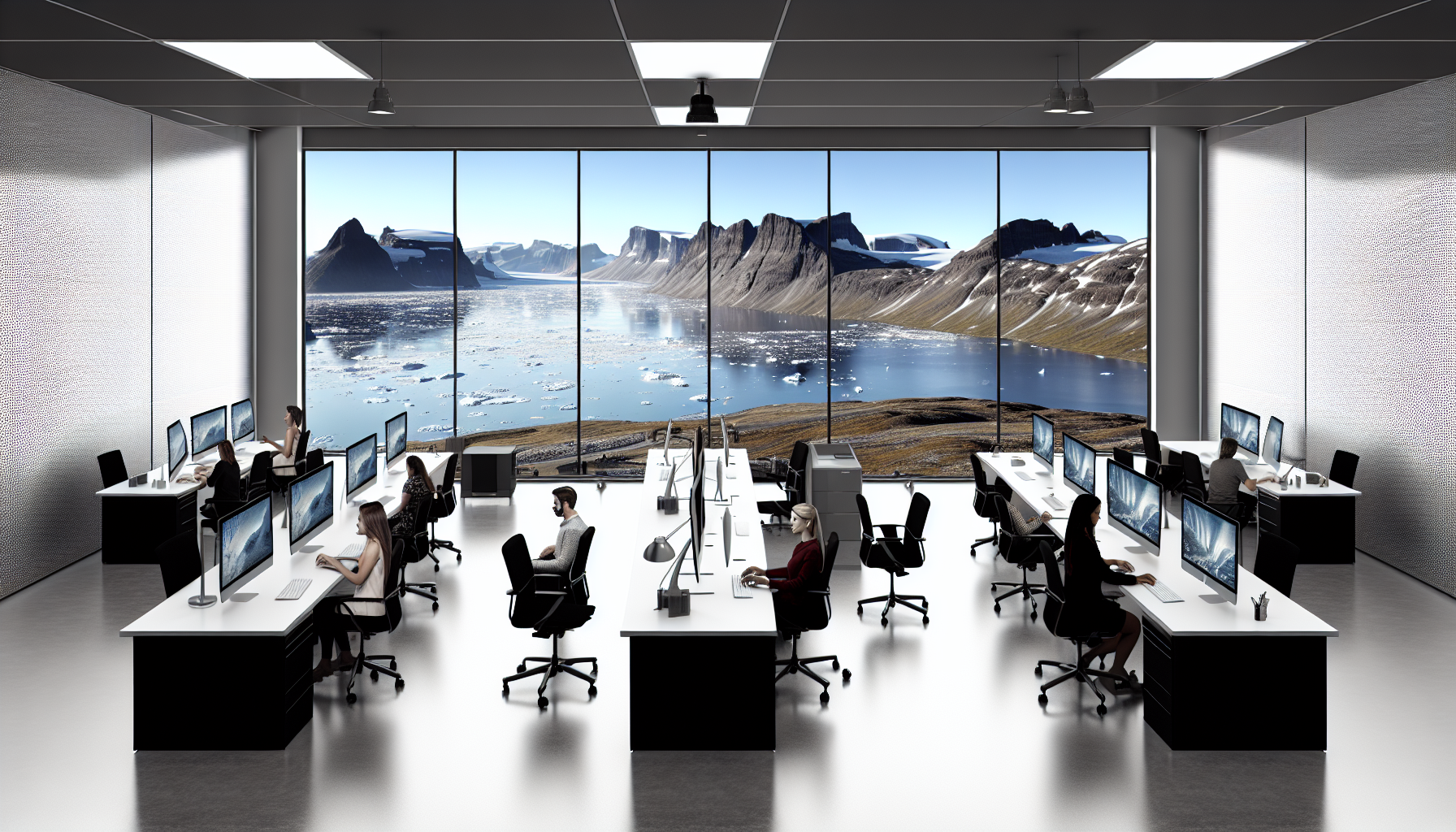
Working as a project manager in Greenland
Working as a project manager in Greenland can be a unique opportunity for those looking to combine professional development with an experience beyond the ordinary. Greenland offers a different lifestyle and spectacular natural experiences, which can help attract project managers from all over the world. In this article, we will dive into what it means to have a project manager job in Greenland, what qualifications are required, salary expectations, and how to adapt to the cultural and practical aspects of living and working in this beautiful country.
We will guide you through the essential steps to understand the job market in Greenland, the economic conditions, and what life looks like for a project manager in the various regions, including Nuuk. We will also look at linguistic and cultural aspects and provide tips on how to integrate into the Greenlandic community. Whether you are considering a job as a project manager in Greenland for a short period or a longer career, this guide will give you the insights to make an informed decision.
The job market and career opportunities in Greenland
In recent years, Greenland has experienced an increasing demand for project managers in various sectors. With growth in construction, infrastructure, mining, and public projects, there are many open doors for those who wish to work as project managers in Greenland. Greenland's economy is in a transition phase, creating opportunities for ambitious professionals who can lead and manage projects effectively in an often challenging environment.
Current job market and demand
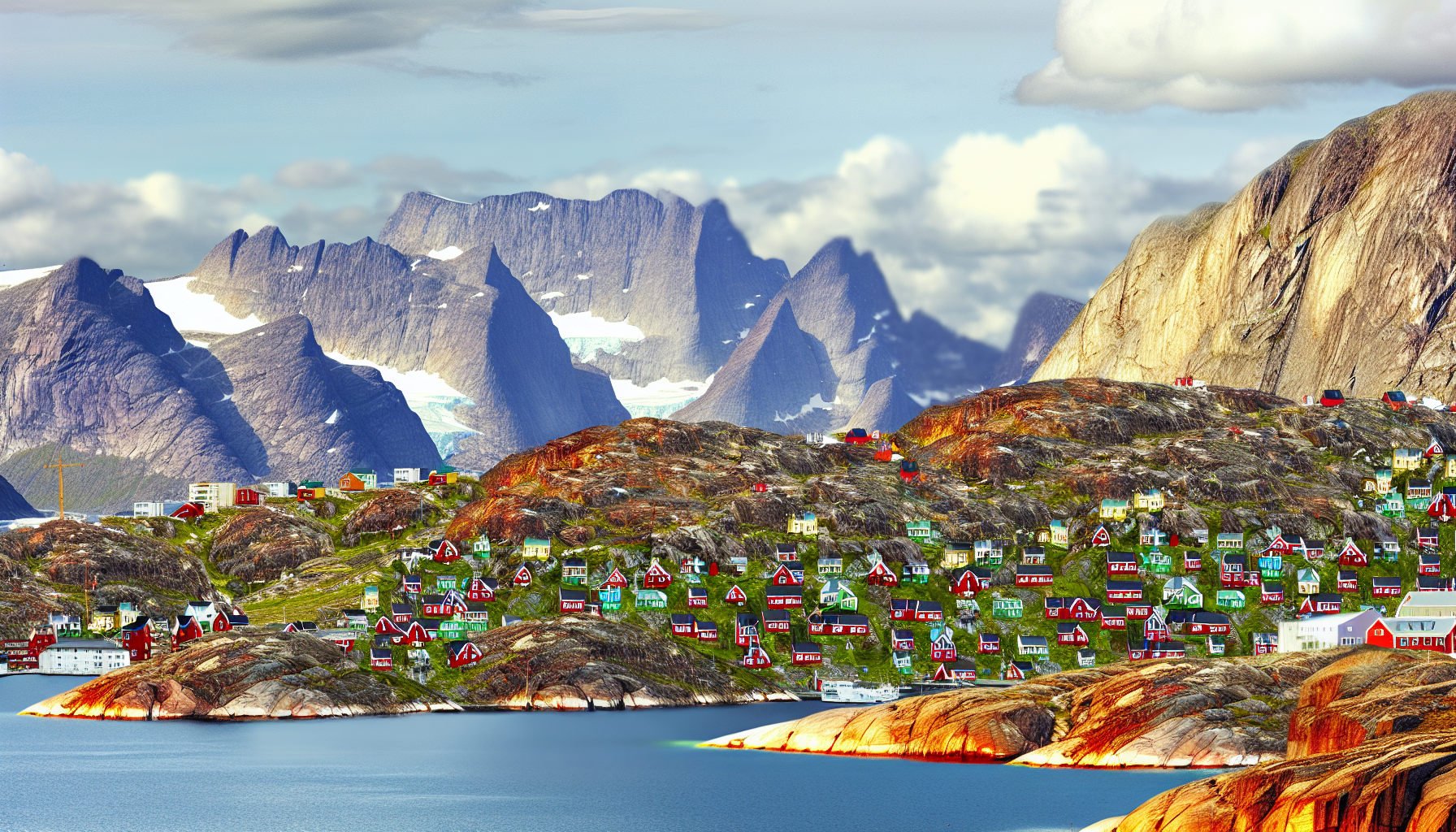
The Greenlandic job market is characterized by a unique dynamic that differs significantly from the rest of the Nordic countries. With a population of around 56,000 people and a limited number of larger cities, there is a high degree of concentration of job opportunities in places like Nuuk, which is Greenland's capital. Here, many of the country's public institutions and private companies are located, making Nuuk an attractive place to seek jobs as a project manager.
The demand for project managers in Greenland is high, especially in construction and infrastructure. Projects such as renovating existing buildings, building new schools and hospitals, and developing transport infrastructure are just some of the areas where experienced project managers are needed. Additionally, the energy sector is growing, focusing on sustainable solutions and renewable energy sources, which also require skilled project managers to manage and implement complex projects.
Qualifications and educational requirements
To work as a project manager in Greenland, one must have the right qualifications and education. Generally, at least a bachelor's degree in a relevant field such as engineering, business administration, or a similar discipline is required.
Necessary education and certifications
A formal education is often a requirement when applying for project manager positions in Greenland. A bachelor's degree or an equivalent qualification in project management, engineering, or business management is typically necessary. Many employers also prefer candidates with a project management certification, such as PRINCE2 or PMP, which can help document one's ability to manage projects effectively.
Additionally, it can be an advantage to have experience with specific project management tools and software that are widely used in the industry. This is especially true if one is seeking work in technology-heavy sectors such as energy or infrastructure.
Language requirements and experience
Language skills play a significant role in Greenland, where both Greenlandic and Danish are official languages. For positions in public institutions, it may be required to have a certain degree of proficiency in Greenlandic, while Danish is typically the working language in many companies. English is also useful, especially in international companies and collaborations.
Experience is another key factor. Employers often prefer candidates with at least a couple of years of experience in project management, especially if the projects involve complex technical aspects or large budgets. Experience from similar environments in, for example, the Arctic or other places with challenging climatic conditions can be a significant advantage.
Specializations and career development
Working as a project manager in Greenland also offers opportunities for specialization and career development. With the right experience and education, one can advance to positions such as senior project manager, program manager, or even project director, depending on the organization's size and structure. Specialization in areas such as construction, mining, or the energy sector can also open doors to unique career opportunities.
In Greenland, there is also the opportunity to work on international projects, which can help expand one's network and professional experience. Many project managers find that working in Greenland provides them with an invaluable platform to develop their leadership skills and gain exposure to multicultural workgroups.
Salary, benefits, and economic conditions
When considering taking a job as a project manager in Greenland, it is important to have a clear understanding of the economic conditions. Although Greenland offers competitive salaries, the cost of living is also a factor to consider. Here, we will review the salary structure, tax conditions, and how to navigate the economic aspects of living and working in Greenland.
Salaries and salary ranges
Project manager salaries in Greenland can vary depending on the sector, experience, and location. Generally, salaries are higher in Nuuk compared to more remote areas, due to the city's status as the capital and economic center.
Base salary and experience
The base salary for a project manager in Greenland typically ranges between 45,000 and 60,000 DKK per month. Experienced project managers can achieve higher salaries, especially if they have specialized skills or work in high-demand sectors such as energy or infrastructure. Compared to a similar position in Denmark, the salary may be slightly higher in Greenland, which is often necessary to compensate for the higher cost of living.
Allowances and bonuses
In addition to the base salary, there are often opportunities to earn allowances and bonuses. Many employers offer relocation bonuses or other incentives to attract talent to more remote areas. There may also be performance-based bonuses or overtime pay, depending on the project's requirements and the nature of the work.
Tax conditions and economic benefits
Greenland has its own tax system, which differs from the Danish one. Tax rates are generally lower, and there are fewer deductions available than in Denmark. It is important to familiarize oneself with the local tax regulations, as they can have a significant impact on disposable income.
Cost of living and savings
The cost of living in Greenland can be high, especially in cities like Nuuk. Expenses for housing, food, and daily necessities are often higher than in Denmark, which is a consequence of the country's geographical isolation and dependence on imported goods.
Housing costs and daily expenses
Housing costs vary depending on the location. In Nuuk, rents can be relatively high, and it can be a challenge to find suitable housing, especially if one is a newcomer. It is advisable to thoroughly research the housing market and consider temporary solutions, such as renting a room while looking for permanent housing.
Savings opportunities
Although the cost of living is high, it is still possible to save money in Greenland. Many choose to prioritize savings by carefully planning their budget and taking advantage of the employer's offerings for pension schemes or other financial benefits. With a targeted approach to financial planning, one can find a balance between enjoying life in Greenland and ensuring a healthy economy.
Daily life and living in Greenland
Living and working in Greenland offers a lifestyle that is significantly different from what one experiences in the rest of Scandinavia. The challenges and opportunities that come with life in the Arctic make it a unique experience that can be both enriching and challenging for those who move there.
Working conditions and work environment
Working as a project manager in Greenland can be characterized by flexibility and varied work environments. It is not uncommon for project managers to work both in office environments and out in the field, depending on the nature and phase of the project.
Working hours and structure
Working hours in Greenland can vary, but most project managers work within a typical 40-hour workweek. However, there is often a need for flexibility, especially when projects require it. Many find that there is a good balance between work and leisure, which is essential for enjoying all that Greenland has to offer.
Workplace culture and colleagues
The workplace culture in Greenland is generally relaxed and less formal than in many other countries. It is important to be open and welcoming, as one often works in close teams where collaboration and communication are key. Many foreign workers find that their colleagues are helpful and interested in teaching them about Greenlandic culture and customs.
Housing and infrastructure
The housing situation in Greenland can be a challenge, especially for newcomers. It is important to have realistic expectations regarding housing standards and the availability of facilities, which can vary depending on where one lives.
Housing options
There are various housing options in Greenland, from apartments in the cities to houses in smaller settlements. It may be a good idea to contact housing associations or local real estate agents for assistance in finding suitable housing. Some employers also offer help with finding housing as part of the employment package.
Transport and facilities
Transportation options in Greenland are limited, and in many places, it is necessary to use boats, planes, or helicopters to get around. In cities like Nuuk, however, there is a well-functioning public transport system that makes it easy to get around. Facilities such as schools, hospitals, and shops are generally well-developed, especially in the larger cities.
Family and social life
For many, one of the greatest advantages of working in Greenland is the opportunity to experience a close-knit community life. Family plays a central role in Greenlandic society, and many workplaces have a family-friendly policy.
Childcare and schools
Greenland has a well-functioning system for childcare and education. There are both daycare centers and schools that offer instruction in both Danish and Greenlandic, which can be an advantage for families with children. Additionally, there are often activities and support available to help with the integration of new families.
Leisure activities and community life
There is a wealth of leisure activities available in Greenland, from traditional kayaking and dog sledding to modern sports activities. Community life is characterized by both local and international events, such as festivals and markets, which contribute to a vibrant social scene. It is an excellent way for newcomers to integrate and learn about Greenlandic culture.
Language, culture, and integration
Language and culture play a significant role in integration in Greenland. For many foreign workers, it can be a challenge to adapt, but with the right resources and an open approach, it can also be a very rewarding experience.
Linguistic conditions
In Greenland, both Greenlandic and Danish are official languages. Therefore, it is important to have an understanding of both, although many workplaces primarily use Danish in professional contexts.
Danish, Greenlandic, and English
Danish is widely used in Greenland's administration and education system, while Greenlandic is the most spoken language in everyday life. English is becoming increasingly widespread, especially among younger generations and in business sectors with international connections. It can be beneficial to improve one's Greenlandic language skills, especially if planning to stay in the country for an extended period.
Language courses and learning
There are several opportunities to learn Greenlandic, from formal language courses at universities and evening schools to online resources and private tutors. Many employers also offer language training as part of the employment package, which can be a great help in the integration process.
Cultural understanding and adaptation
Adapting to Greenlandic culture requires a willingness to learn and understand local traditions and customs. It is about being respectful and curious, and many find that the cultural differences can also offer an enriching dimension to their life experiences.
Greenlandic traditions and customs
Greenland has a rich cultural heritage that is deeply rooted in the Arctic environment. Traditional activities such as fishing, hunting, and handicrafts still play a significant role in many communities. It is a good idea to participate in local festivals and events where one can gain insight into the country's history and customs.
Cultural differences
There are certain cultural differences between Greenland and Denmark that may require adjustment. For example, there is often a more relaxed approach to time and a greater emphasis on personal relationships in professional life. Showing respect and openness to these differences can be a crucial factor in successful integration.
Climate, nature, and quality of life
Greenland is known for its magnificent nature and unique climate, which can be both alluring and challenging. For many, nature is one of the biggest reasons to move to Greenland, and it undoubtedly positively affects the quality of life.
The climate and seasons
Greenland experiences an Arctic climate, which means cold winters and mild summers. The extreme weather conditions can take time to get used to, but they also offer a beauty and tranquility that is hard to find elsewhere.
Weather conditions and temperatures
Temperatures in Greenland can vary significantly depending on the season and region. In the winter months, temperatures can drop below -20 degrees Celsius, while summers can offer pleasant temperatures around 10-15 degrees. It is important to be prepared with appropriate clothing and equipment to navigate safely and comfortably in nature.
Polar night and midnight sun
The polar phenomena of polar night and midnight sun are part of life in Greenland. In the northern regions, the sun does not set at all during the summer, while winter can bring long periods without daylight. This requires adjustment, and many use light therapy and carefully plan their activities to cope with the psychological impact of these extreme conditions.
Nature and recreational opportunities
Greenland offers a wealth of outdoor activities that can be enjoyed year-round. From hiking and sailing in the summer to dog sledding and skiing in the winter, there is something for everyone. Nature is an integral part of the Greenlandic lifestyle, and many spend their free time exploring the breathtaking landscapes and rich wildlife.
Application and practical steps
Moving to Greenland to take a project manager job requires a lot of planning and preparation. It is important to understand the application process and what practical matters need to be in place before making the leap.
Job search and application process
When starting your job search in Greenland, it is important to have a plan for how you will find the right positions and prepare a strong application.
How to find jobs
Most jobs in Greenland are found through online job portals, networking, and direct contact with employers. It can be a good idea to build a network in the Greenlandic business world and participate in professional events where you can meet potential employers and colleagues. Recruitment agencies can also be a valuable resource in the job search process.
Application and CV
When applying for a job as a project manager in Greenland, it is important to have a clear and professional CV that highlights relevant experience and qualifications. A well-structured application that clarifies your motivation for working in Greenland can also make a big difference. It is important to tailor your CV and application to the specific position and company to increase your chances of success.
Relocation and practical preparations
Moving to Greenland requires thorough planning, especially regarding practical aspects such as housing, visa, and work permit.
Work permit and visa
As a Danish citizen, you do not need a visa to work in Greenland, but it may be necessary to register with the local authorities. For foreign nationals, there may be requirements for a work permit, depending on one's nationality and job type.
Relocation assistance and onboarding
Many employers in Greenland offer relocation assistance and onboarding support for newcomers. This can include help with housing, information about local conditions, and introductions to the Greenlandic community. It is a good idea to discuss these options with the employer when negotiating the employment package.
Conclusion
Working as a project manager in Greenland is an opportunity for personal and professional growth in a unique environment. With the right preparations and an open approach, one can achieve a rewarding career that combines professional challenges with the scenic experiences that Greenland has to offer. It is important to understand the economic, cultural, and practical aspects of moving to and working in Greenland to ensure successful integration and well-being. If you are considering taking the step, it could be the start of an unforgettable adventure in the Arctic.
By HireMe.gl
10 / 01 / 2026