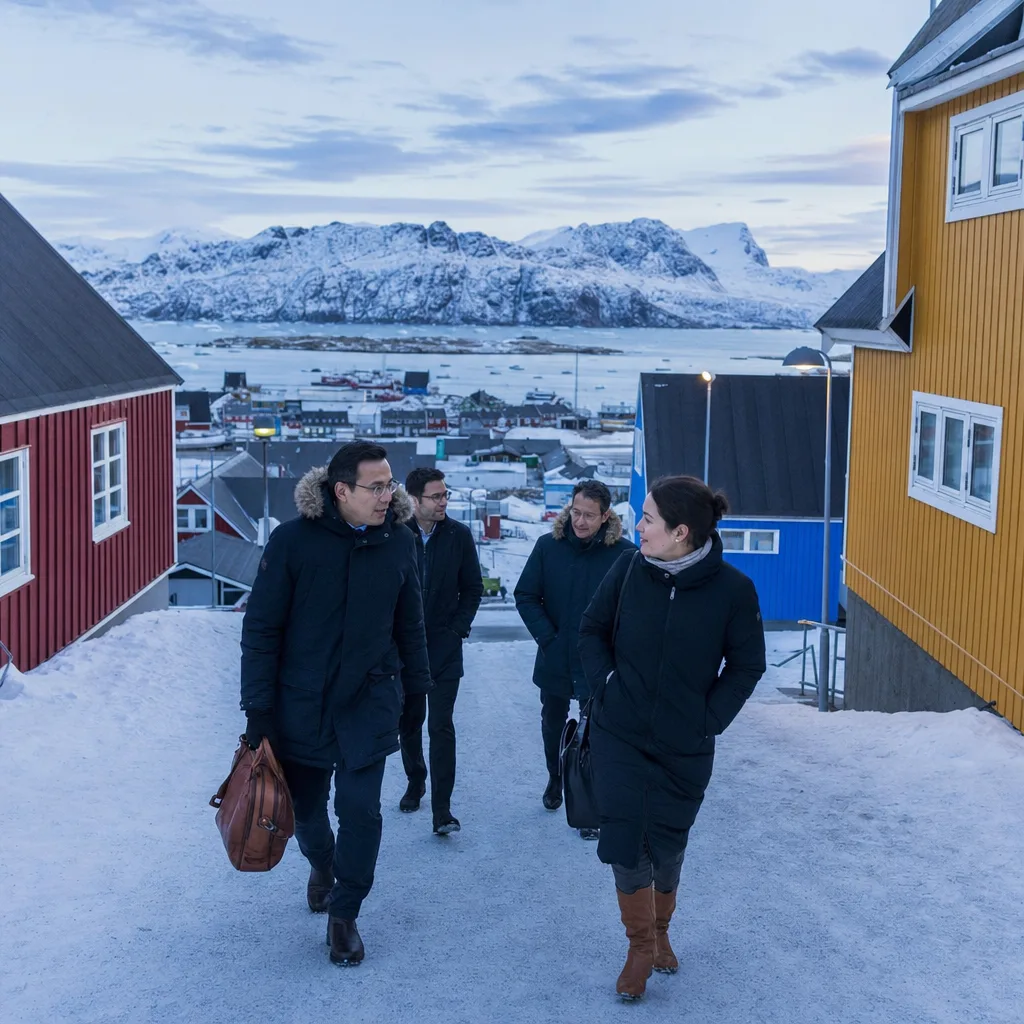

Background image for Working in Greenland: Everything You Need to Know

Working in Greenland: Everything You Need to Know

Share on:

Working in Greenland: Everything You Need to Know

Working in Greenland offers unique opportunities and challenges that can be both exciting and enriching for your career. Greenland, with its magnificent nature and culture, attracts many who seek new experiences and professional opportunities. This article will guide you through everything you need to know about working in Greenland, from the job market to the cultural and practical aspects that will help you make informed decisions.

We will cover important topics such as the job market and the career opportunities available in Greenland, with a particular focus on Nuuk. We will also delve into salary conditions and the economic considerations that come into play when working in Greenland. Daily life, including working conditions, housing situations, and social life, will also be highlighted. Additionally, we will take a look at the language, culture, and climate, all of which are important factors for your well-being and integration. Finally, we will review the application process and practical steps to ensure a smooth transition to your new work life in Greenland.

The Job Market and Career Opportunities in Greenland

Greenland's job market is characterized by a mix of traditional occupations and modern sectors. While fishing and hunting are still an important part of the economy, there are also many opportunities in administration, health, education, and tourism. Nuuk, which is the capital of Greenland, is the center for many of these opportunities and offers a range of positions in both public and private sectors. For many, it is exciting to explore job opportunities in such unique surroundings, where careers as primary school teachers, nurses, or in the tourism industry can be very rewarding.

Current Job Market and Demand

The job market in Greenland is constantly evolving, which means there is an increasing demand for qualified professionals in certain sectors. For example, there is a significant demand for healthcare personnel such as doctors, nurses, and psychologists, especially in the more remote areas. This is due not only to the steadily growing population but also to the need for specialized healthcare that can address various health challenges in the Arctic environment.

The tourism sector is also growing, thanks to Greenland's unique natural landscapes that attract visitors from around the world. Jobs as tour guides or in the hotel industry have therefore become more widespread, especially in tourist hotspots like Ilulissat and Nuuk. Additionally, there is also an increasing demand for labor in the education sector, where positions such as primary school teachers or high school teachers are sought after.

Furthermore, Greenland's strategic location and rich natural resources have led to new initiatives in mining and oil exploration, creating additional job opportunities for engineers and geologists.

Qualifications and Educational Requirements

To participate effectively in the Greenlandic job market, it is important to have the right qualifications and education. While some jobs require specific degrees, there are also opportunities for those with practical experience and skills. For example, if you are considering working as an engineer in Greenland, it is beneficial to have a relevant education and experience from similar projects. It is important to be aware of the specific requirements that may vary from one sector to another.

Necessary Degrees and Certifications

The necessary degrees and certifications vary depending on the specific position and industry. For example, a career as a nurse in Greenland requires a license recognized in Greenland, and it may often be necessary to undergo additional training to adapt to local conditions and standards. Similarly, if you wish to work as a primary school teacher in Greenland, you must have an educational background that matches both Danish and Greenlandic teaching standards.

For positions in tourism, experience and knowledge of Greenland's natural and cultural attractions can be just as important as formal qualifications. Here, local training programs or courses in tour guiding can be extremely useful. In technical areas such as mining or oil exploration, specific technical certifications are often also required.

Language Requirements and Experience

Although Danish is an official language in Greenland, and many positions require Danish language skills, it is a great advantage to also speak Greenlandic. Language requirements often depend on the type of job and the employer. For example, a position as a teacher in a Greenlandic school may require you to communicate fluently in both languages. Similarly, a job as a nurse in a hospital in Nuuk may require Greenlandic language skills to effectively communicate with patients.

Experience also plays an important role in your job opportunities in Greenland. Many employers prefer applicants who have worked under similar conditions or have experience with the Arctic environment. Therefore, it is important to highlight any relevant experience in your application, whether it is from previous jobs or volunteer work.

Specializations and Career Development

Working in Greenland can open up several specialization opportunities and career development paths that are not always available elsewhere. Greenland's unique conditions often require specialists with expertise in specific areas. This creates a platform for professionals to develop new skills and pursue specialized career paths.

In the healthcare sector, specialization in Arctic medicine or public health may be particularly relevant. These areas require an understanding of the specific health needs faced by Greenland's population, as well as the environmental factors that can affect health. A nurse specializing in tropical medicine may find it valuable to expand their knowledge to include Arctic environments.

The education sector also offers opportunities for specialization, especially in Greenlandic culture and language. Teachers may choose to focus on developing curricula that integrate Greenlandic culture into their teaching, which can help preserve and promote local heritage.

In the tourism industry, a deep understanding of Greenland's nature and history can be a valuable specialization. Tour guides who can offer unique insights into both the local culture and the spectacular landscapes will find their skills highly valued.

Finally, in the natural resources and energy sector, specialization in sustainable technologies and environmental conservation may become more in demand. As an engineer, you may focus on developing environmentally friendly methods for extracting natural resources, which is a significant concern in Greenland's development strategy.

Salary, Benefits, and Economic Conditions

When considering taking a job in Greenland, it is essential to understand the salary structure and the economic conditions you can expect. Salaries in Greenland can vary significantly depending on the sector, profession, and your experience. Additionally, there are other economic benefits and tax conditions that you should also take into account. Although the cost of living may be higher than in Denmark, Greenland offers some unique financial advantages that can make working there economically beneficial.

Salaries and Salary Ranges

Salaries in Greenland can be quite competitive, especially in positions where there is a shortage of qualified labor. Generally, salaries can be higher than in Denmark in certain sectors, which is often necessary to compensate for the higher cost of living. For example, if you work as a doctor in Nuuk, you can expect an attractive salary that reflects both the high demand for healthcare personnel and the unique challenges of the Greenlandic healthcare system.

Base Salary and Experience

The base salary in Greenland varies depending on job type and the experience you bring to the table. For many jobs, especially in specialized sectors such as health and engineering, the level of experience is a crucial factor in salary determination. An engineer with many years of experience can expect a higher salary than a recent graduate, while the base salary for a primary school teacher in Nuuk typically falls in the middle range of the scale. Compared to Denmark, salaries for similar positions can often be higher in Greenland due to the smaller workforce and isolated locations.

Allowances and Bonuses

In addition to the base salary, many positions in Greenland may also offer various allowances and bonuses. These can include compensation for overtime, where workers in sectors such as health and gastronomy often work outside normal working hours. Additionally, there are often location allowances for those working in more remote areas where living costs and transportation can be more expensive. Performance-based incentives may also be available, especially in private companies or international firms operating in Greenland.

Tax Conditions and Economic Benefits

Greenland's tax system has its own characteristics that differ from the Danish one. Taxes in Greenland can be high, but there are also several deductions and economic benefits that can ease the overall tax burden. It is important to understand the specific tax rules that apply in Greenland, as they may vary from those in Denmark.

At the same time, Greenland offers some economic benefits, such as housing allowances for those working in certain public positions. There are also subsidy options for childcare and other family expenses, which can be a helpful factor in your financial planning. It is also worth noting that some employers offer additional benefits such as health insurance and pension plans, which can help ensure long-term financial stability.

Cost of Living and Savings

The cost of living in Greenland is generally higher than in Denmark, primarily due to import dependence and transportation costs. Therefore, it is important to consider these costs in your financial planning when deciding to work in Greenland. At the same time, there are opportunities for savings and financial planning that can help maximize your financial situation.

Housing Costs and Daily Expenses

Housing costs in Greenland can be a significant part of your living expenses, especially in cities like Nuuk, where the demand for housing is high. It is important to thoroughly research the housing market and be prepared for higher rent prices compared to Denmark. Daily expenses, such as groceries and transportation, can also be higher, so it may be beneficial to create a detailed budget plan to manage your expenditures.

Savings Opportunities

Although the cost of living is high, there are still opportunities for savings in Greenland, especially if you plan your expenses wisely. Thorough financial planning, including budgeting for both necessary expenses and savings, can help ensure that you get the most out of your salary. Many professionals in Greenland benefit from the high salaries to build a solid savings, which can be useful for future investments or retirement.

Daily Life and Living in Greenland

Daily life in Greenland offers a unique lifestyle characterized by both the impressive landscape and the unique community. Adapting to life in Greenland requires an openness to new experiences and a willingness to adjust to a different work environment and culture. When you work in Greenland, you will experience working conditions, housing options, and social circumstances that may differ from those you are used to in Denmark.

Working Conditions and Work Environment

Working conditions in Greenland can vary depending on the sector and type of job, but generally, there is a focus on creating a healthy work-life balance. Greenland's work culture can be characterized by a more relaxed approach, where flexibility and adaptability are key. It is important to be aware of the cultural differences in the work environment and to be open to different ways of working.

Working Hours and Structure

Working hours in Greenland can vary depending on the job and sector. Many positions follow the traditional working hours from 8 to 4, but there is also the possibility of flexible working hours, especially in sectors such as tourism and health, where there may be a need for evening and weekend work. A typical workday in Greenland may also include breaks where you can enjoy nature, which is an essential part of the Greenlandic lifestyle.

Workplace Culture and Colleagues

The workplace culture in Greenland is often more informal than in Denmark. It is important to be open and respectful of local customs. You may find that there is less hierarchy and more emphasis on teamwork and collaboration. Collegial relationships are often strong, and there is a high degree of mutual respect and understanding, which can create a pleasant and productive work environment.

Housing and Infrastructure

The housing situation in Greenland can be a challenge, especially in larger cities like Nuuk, where demand often exceeds supply. It is important to be prepared and plan ahead to find suitable housing. The infrastructure in Greenland is also unique compared to many other places, as most towns are not connected by road but instead rely on air and sea transport.

Housing Options

There are various types of housing in Greenland, from apartments in the cities to houses in more rural areas. Finding housing can require time and patience, and it is often a good idea to start the search as early as possible. Many employers also offer assistance with housing searches as part of the employment package, especially for positions that are hard to fill.

Transport and Facilities

Transportation options in Greenland are limited compared to many other countries. There are no cohesive road systems between towns, which means that transport between towns often occurs by plane or boat. Locally in the towns, there are options for buses, taxis, and bicycles. The infrastructure for public services and facilities such as health and education is generally well-developed, especially in the larger cities.

Family and Social Life

Social life in Greenland is characterized by close neighborhoods and strong communities. There is an active social life with many recreational activities and cultural events that can help you integrate and feel at home in the Greenlandic community.

Childcare and Schools

Greenland offers a range of options for childcare and education. There are access to daycare centers and schools in most towns, with programs that integrate both the Danish and Greenlandic education systems. School curricula often include Greenlandic culture and language, which can be a valuable experience for the children.

Recreational Activities and Community Life

There are many recreational activities available in Greenland, especially for those who enjoy outdoor activities such as hiking, kayaking, and fishing. Communities in Greenland are known for their hospitality, and new residents are often encouraged to participate in local events and festivals that provide opportunities for social interaction and integration.

Language, Culture, and Integration

Navigating the language and culture in Greenland is crucial for successful integration into the community. While Danish is a widely spoken language, Greenlandic also plays a crucial role in daily life. Understanding and respecting the local culture can help you build relationships and thrive in your new environment.

Linguistic Conditions

The language in Greenland is an important part of the culture and can be a challenge for many newcomers. While Danish is one of the official languages and is widely used in the education sector and public life, Greenlandic is also prevalent, especially in everyday and social contexts. English is also increasingly used, especially in the tourism industry and among younger generations.

Danish, Greenlandic, and English

It is an advantage to be able to speak Danish, Greenlandic, and English, as this allows you to communicate effectively in various contexts. Greenlandic is a polysynthetic language that differs significantly from Danish, so it requires time and dedication to learn. Many Greenlandic workplaces offer language courses as part of the onboarding process to help new employees acquire the language skills necessary for the job.

Language Courses and Learning

There are several options for learning Greenlandic, including language schools and courses tailored for foreigners. Many employers support their employees in taking language courses, which can enhance work-related skills and assist with social integration. There are also online resources available to support self-study.

Cultural Understanding and Adaptation

Understanding and adapting to Greenlandic culture can take time, but it is crucial for successful integration. Greenland has a rich cultural heritage reflected in traditions, art, and daily life. By engaging in local customs and showing respect for Greenlandic culture, you can settle in more quickly and be accepted into the community.

Greenlandic Traditions and Customs

Greenland has many unique traditions closely linked to its history and nature. For example, hunting and fishing play an important role in Greenlandic culture and lifestyle. Local events such as National Day and various festivals allow you to experience the rich cultural heritage and participate in community life.

Cultural Differences

There are several cultural differences between Greenland and Denmark that can affect your experience of living and working in Greenland. It is important to be aware of social norms and to respect local etiquette. For example, personal space and direct communication are valued, and it is often appropriate to show respect for elders and traditions.

Climate, Nature, and Quality of Life

Greenland's climate and natural landscapes are among the most remarkable aspects of living and working in the country. The Arctic nature offers both challenges and countless opportunities for outdoor experiences that can enhance your quality of life and make your time in Greenland memorable.

The Climate and Seasons

The climate in Greenland is Arctic, which means cold winters and cool summers. It is important to prepare for the changing weather conditions and the extreme temperatures that can vary significantly depending on the region and season. For those not accustomed to Arctic conditions, it may take time to adapt, but the clean air and stunning nature can be a great reward.

Weather Conditions and Temperatures

Average temperatures in Greenland range from -10 °C in the cold winter months to around 10 °C in the summer. Although it may sound cold, it is dry, and the wind can feel less sharp than in Denmark. It is important to have appropriate clothing to be prepared for the cold temperatures. Layered clothing and insulating materials are essential for staying warm.

Polar Night and Midnight Sun

One of the most remarkable natural phenomena in Greenland is the long polar night in winter and the midnight sun in summer. The polar night can last for several months, depending on where you are in Greenland, which may require adjustments to your daily routine. Conversely, the midnight sun offers endless daylight opportunities for outdoor activities and can be a fantastic experience.

Nature and Recreational Opportunities

Greenland is blessed with an abundance of natural beauty and rich wildlife, providing a wide range of recreational opportunities. From glacier hikes to kayaking and polar bear safaris, there is something for everyone. The nature in Greenland is both a refuge for the adventurous and a tranquil oasis for those who wish to enjoy the quiet life.

Application and Practical Steps

Once you have decided to pursue a job in Greenland, the next step is to understand the application process and the practical steps necessary for moving. It can be a significant transition, but with the right preparation, the move can be smooth and seamless.

Job Search and Application Process

Job searching in Greenland can be a unique experience, and it is important to be proactive in your approach. There are several ways to find jobs, including online job portals, networking, and direct contact with employers.

How to Find Jobs

An effective way to find positions in Greenland is to use online job databases and specialized job portals for Greenland. Networking is also an essential part of the job search; participate in professional events and be active on social media to expand your contacts. Recruitment agencies can also be helpful in the process, especially if you are looking for positions in specialized areas.

Application and CV

When applying for jobs in Greenland, it is important to have a professional CV and a motivated application that highlights your qualifications and experiences. Be sure to tailor your CV to the specific job and include relevant keywords from the job posting. Also, be prepared for interviews that may require both phone and in-person meetings, depending on the employer's preferences.

Moving and Practical Preparations

Moving to Greenland requires careful planning and understanding of the practical details involved. From work permits to finding housing, there are many aspects to consider to make your transition as smooth as possible.

Work Permit and Visa

To work in Greenland, you must secure the necessary work permits and visas, depending on your nationality. It is important to research the requirements and application process well in advance, as it can take time to get all documentation in order. The Government of Greenland can be a valuable resource in this process, as they can provide guidance on the specific requirements and procedures.

Relocation Assistance and Onboarding

Many employers in Greenland offer relocation assistance and onboarding programs to support new employees in their transition. This can include help with finding housing, language training, and other resources that facilitate integration into the Greenlandic community. It is also important to be prepared for the practical aspects of moving, such as arranging transportation for your belongings and ensuring that you have the necessary insurance in place.

Conclusion

Working in Greenland can be both a challenging and enriching experience that opens up unique career opportunities in one of the world's most fascinating environments. With an understanding of the job market, salary conditions, and cultural aspects, you will be well-equipped to take the leap and start a new chapter in your professional life.

It is important to have realistic expectations and be prepared for the challenges that may arise, but also to be open to the many positive experiences and opportunities that Greenland offers. By being well-informed and prepared, you can create a successful and rewarding career in Greenland while enjoying the fantastic nature and rich culture the country is known for.

Finally, remember to network and build relationships both professionally and socially, as this can be the key to successful integration and a satisfying stay in Greenland. Good luck with your future adventures in Greenland!

By HireMe.gl

09 / 02 / 2026

Read also

Background mountains

Sign up for our newsletter

Become part of the labor market of the future and stand out from the crowd by signing up for our newsletter at hireme.gl. We make sure to keep you informed about the most exciting job openings and help you find your dream job before other candidates get the chance.

...