

Psychologist and psychiatrist in Greenland: job, daily life, and conditions
04 May 2026
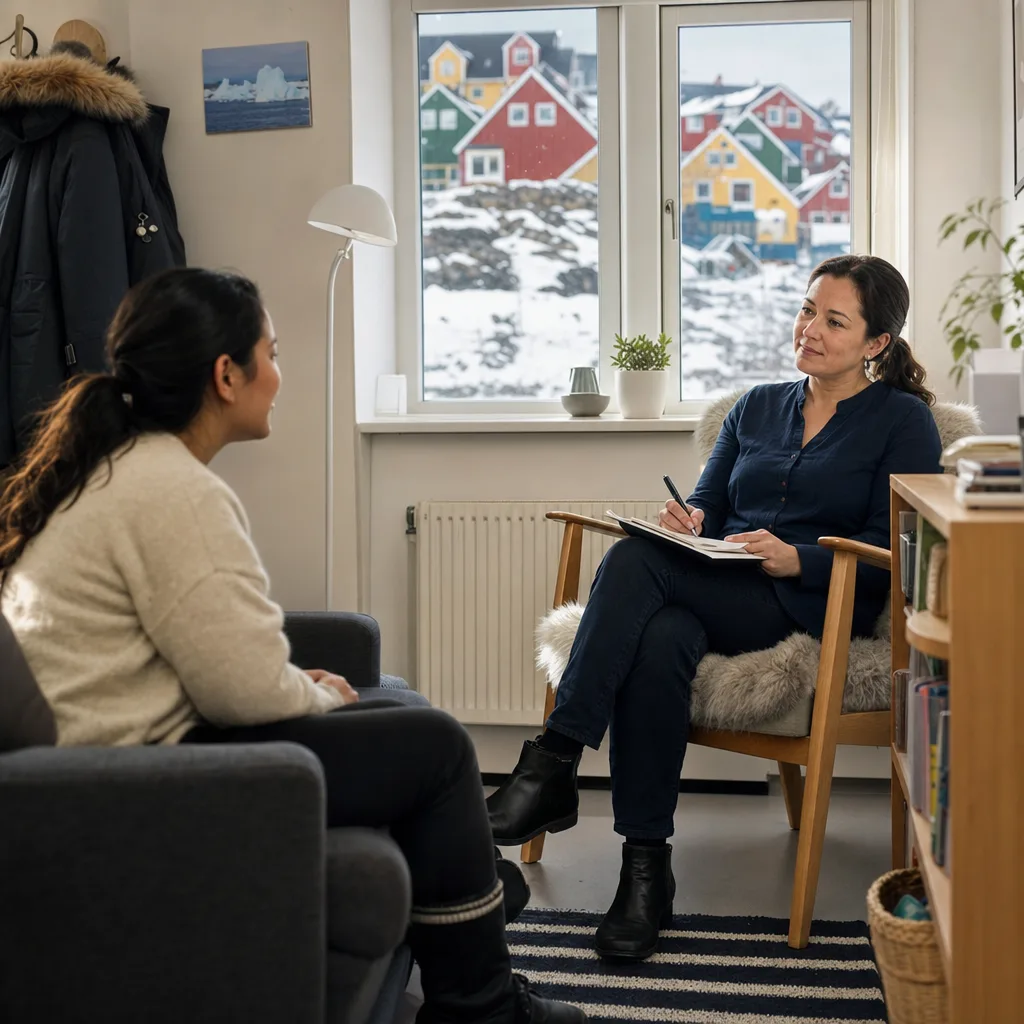
There is a need for both psychologists and psychiatrists in Greenland – but the job rarely resembles a “classic” position in a Danish city. You often work broadly, closely with other professional groups and with long distances, where good coordination and robustness in everyday life matter a lot.
Where do psychologists and psychiatrists typically work?
Most positions are located in and around the public sector. This applies both in larger cities like Nuuk, Sisimiut, Ilulissat, Qaqortoq, and Aasiaat – and at times also through visits to smaller towns and settlements. What is available where changes with recruitment and organization, so always check the specific postings.
- Healthcare: assessment and treatment, staff counseling, interdisciplinary processes, and often complex cases involving both somatics and psychiatry.
- Municipalities: PPR/psychological professional counseling, family and child areas, crisis intervention, collaboration with schools and social services.
- Education and institutional sector: well-being work, supervision, and support for staff in round-the-clock and day care services.
- Private/self-owned services and projects: less common, but occurs – especially in time-limited interventions.
If you want to get an overview of who is hiring, you can also look at companies and public workplaces in Greenland.
The tasks: broad clinical work and a lot of collaboration
When people search for “psychologist and psychiatrist Greenland,” it often concerns both professionalism and the framework surrounding it. Professionally, you may encounter a broad palette: acute issues, long-term processes, assessments, medical treatment (for psychiatrists), and counseling/supervision. In smaller units, you may have a wider range of tasks than you are used to.
The interdisciplinary aspect typically plays a significant role: nurses, social workers, educators, teachers, addiction counselors, and local resource persons. You need to be able to translate psychological and psychiatric knowledge into practice, where there is not always “an extra team” to refer to.
Language and cultural understanding in practice
Danish functions as a working language in many places, but Greenlandic plays a central role in meeting citizens and relatives. Many processes require interpretation, which places demands on your method: short sentences, clear structure, extra checks for mutual understanding, and ample time for relationships. Cultural curiosity and respect are not a side competence – it is part of the treatment work.
Qualifications, authorization, and what is typically requested
Requirements vary by workplace and tasks, but there are some patterns:
- Psychologist: Cand.psych. is the foundation. Many positions value clinical experience, preferably with children/youth, trauma, addiction, psychiatric issues, or acute work. Authorization and specialist level can be an advantage, but are not always a formal requirement – read the posting carefully.
- Psychiatrist: Medical authorization and specialist recognition in psychiatry are typically central for positions with treatment responsibility. Some functions may be directed towards defined tasks or temporary positions.
- Interdisciplinary experience: the ability to work consultatively, provide supervision, and support local capacity building can be just as important as your own patient processes.
There may also be formal matters regarding approvals, record-keeping practices, and workflows, which you will only fully understand once you know who the employer is. Use the job posting as a reference and ask about introduction, professional sparring, and supervision before you say yes.
Salary and terms: what you can realistically expect (without numbers)
“Salary and terms” are significant considerations when contemplating a job in Greenland. The level and composition depend on the employer, collective agreement/contract, experience, and whether you are employed permanently or as a temporary worker. Therefore, it does not make sense to promise a specific salary.
On the other hand, there are some terms you will often encounter when recruiting from outside:
- Housing: many positions offer designated or temporary housing as part of the package, but standards and terms vary. Ask specifically: rent, furnishing, waiting time, and what happens at the end of the contract.
- Travel: transportation in Greenland can be expensive and weather-dependent. Some contracts include travel terms for arrival and departure or for business trips.
- Work organization: in smaller units, you may have emergency or acute tasks, and planning is affected by flight and weather conditions.
- Tax and deductions: rules depend on your situation and residence. Get a handle on it early so you understand your actual finances.
If you want a practical framework for “working in Greenland” – housing, everyday life, and preparation – then read the guide to working in Greenland and what you need to know when moving to Greenland for work.
Everyday life in the towns: differences you notice quickly
Nuuk typically has the largest professional environment and more collaborators, while Sisimiut, Ilulissat, Qaqortoq, and Aasiaat often mean closer networks and more “hands-on” coordination. In all towns, the local community becomes part of working life: you meet people in Brugsen, at events, and at the harbor. For some, it is comforting; for others, it requires awareness of boundaries and ethics.
The climate and dark season can affect energy levels and planning – also for patients. Many thrive with nature and tranquility, but it is worth being honest: it can feel far away from family and professional networks, especially at the beginning. Therefore, ask about onboarding, collegial sparring, opportunities for further education, and how to handle high stress during periods.
Next steps: how to find a match
- Clarify your profile: do you primarily want clinical, consultative role, children/youth, acute, or a combination?
- Choose the framework: a big city with a larger team (often Nuuk) or a smaller place with a broader task portfolio.
- Ask specifically before saying yes: housing, travel terms, supervision, interpretation, record system, on-call/emergency, and what is expected in the first 4–8 weeks.
- Plan for relocation: paperwork, insurance, finances, and what to do if the housing is not ready upon arrival.
Find current psychologist and psychiatrist jobs
See all available positions in Greenland and filter for psychologist/psychiatry and city (Nuuk, Sisimiut, Ilulissat, Qaqortoq, Aasiaat, etc.) on HireMe.gl, so you get the terms that apply right now.