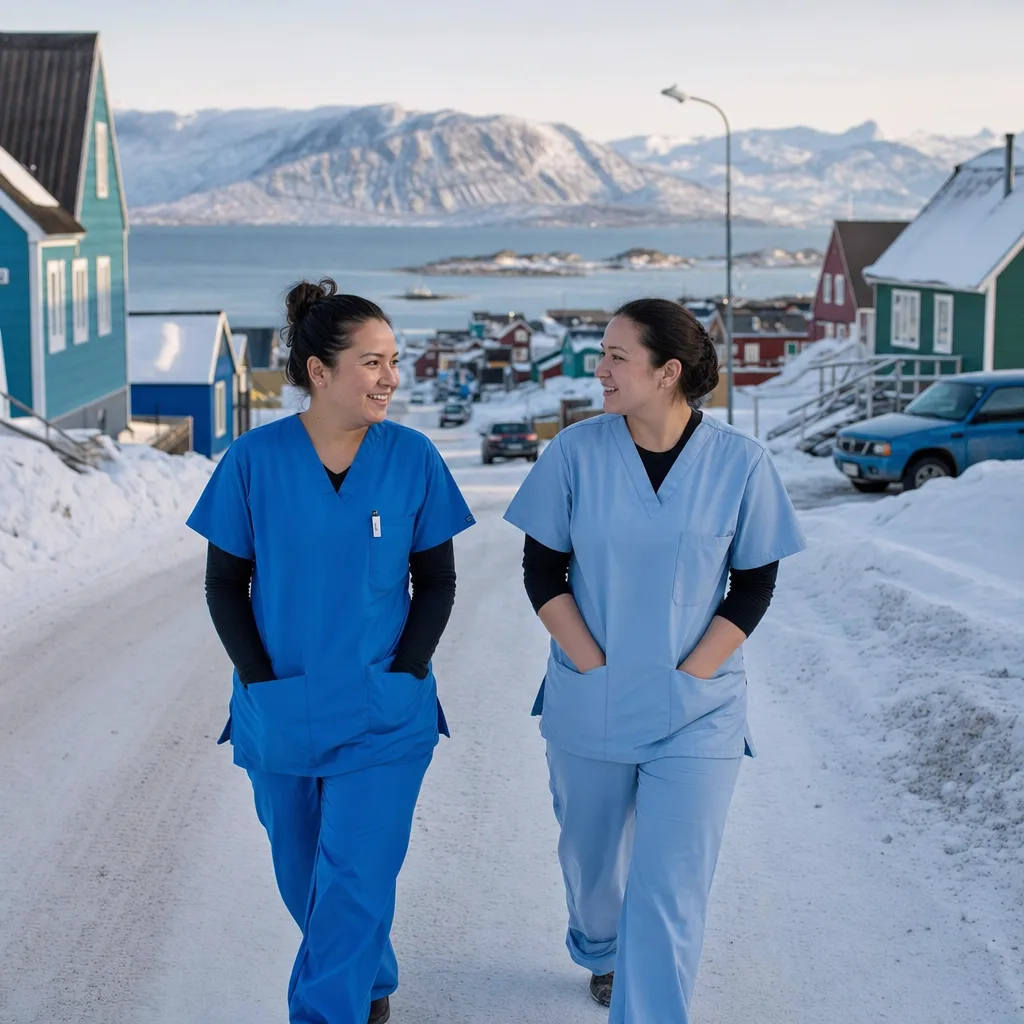

Background image for Working as a Nurse and Midwife in Qeqqata

Working as a Nurse and Midwife in Qeqqata

Share on:

Work as a nurse and midwife in Qeqqata

Considering a career in Greenland's healthcare system can be an exciting opportunity for many health professionals. Greenland offers unique experiences and challenges, especially in regions like Qeqqata. This article will provide you with a comprehensive guide to working as a nurse and midwife in Qeqqata, including practical information about salary, working conditions, cultural integration, and more. If you are considering a job as a nurse in this part of Greenland, it is important to understand both the professional requirements and the personal adjustments that life here demands.

We will delve into the details of job opportunities within the healthcare sector in Qeqqata, economic conditions, daily life, and living in Greenland, cultural integration, as well as climate and nature conditions. For those planning to take the leap into a job as a midwife in Greenland, this article is designed to provide a clear picture of what to expect.

The job market and career opportunities in Greenland

Greenland, with its unique geography and culture, offers special opportunities for those looking to work in healthcare. Qeqqata, which is one of Greenland's municipalities, is no exception. Here, healthcare is an important part of the community, and there is a constant need for qualified professionals such as nurses and midwives. This part of Greenland, which spans a large area, includes both urban environments and more isolated areas, providing a wide range of working environments and patient groups.

Current job market and demand

The healthcare system in Qeqqata is experiencing an increasing demand for qualified professionals, especially in nursing and midwifery. The growing population and the specific health needs in the region create a dynamic job market. There is a particular focus on attracting health professionals who can work in both urban and more remote areas, where access to healthcare services often requires creativity and flexibility.

Examples of job tasks can vary from acute care in a smaller town to midwifery assistance in a local health center. For nurses, tasks can range from general care to specialized interventions, providing opportunities for professional development and specialization. Qeqqata also offers job opportunities for those interested in working in interdisciplinary teams, as collaboration between different specialties is crucial for maintaining an effective healthcare system.

Qualifications and educational requirements

To work as a nurse or midwife in Qeqqata, there are certain educational requirements and qualifications that must be met. These requirements ensure that healthcare personnel are capable of delivering high-quality care under the unique conditions found in Greenland.

Necessary education and certifications

For nurses, a recognized nursing education and a valid authorization are required. It is important to have a strong theoretical and practical background, as the working conditions in Qeqqata can be demanding. For midwives, similar requirements apply with an authorized midwifery education. Many employers in Greenland offer additional training programs and certifications as part of the onboarding process to ensure a good adaptation to local conditions.

Language requirements and experience

Language requirements in Greenland can vary depending on the region. In Qeqqata, it is advantageous to be able to communicate in both Danish and Greenlandic, although many workplaces offer language support. Experience from previous positions in healthcare, especially in multicultural environments, can also be a significant advantage. It is important to be open to developing new skills and adapting to the language and cultural differences that working in Greenland may entail.

Specializations and career development

Working as a nurse or midwife in Qeqqata can open the door to various specialization and career development opportunities. Many health professionals choose to specialize in areas such as pediatrics, acute care, or public health. Greenland offers a unique framework for professional growth, where professionals can develop through both practical experience and further education.

There are also opportunities to participate in research projects or health initiatives, which can enrich one's professional portfolio and create new career paths. For those looking to advance in their careers, management or coordinator roles may be the way forward, allowing for influence on the development of healthcare services in the region.

Salary, benefits, and economic conditions

Understanding the economic conditions and benefits of working as a nurse or midwife in Qeqqata is crucial for making an informed decision about relocating. Greenland has a unique economic landscape, where salaries and living costs can differ significantly from those in Denmark. It is important to consider these factors when contemplating a career in this part of the world.

Salaries and salary ranges

Salaries for nurses and midwives in Qeqqata depend on experience, specialization, and workplace. Generally, Greenland offers competitive salaries to attract qualified labor to the more remote areas. Salaries can vary, but are often higher than in Denmark due to the additional challenges of working in Greenland.

Base salary and experience

The base salary for nurses in Greenland typically starts higher than in Denmark, reflecting the unique challenges and needs of the region. For midwives, similar conditions apply, where experience plays a significant role in salary determination. Greenland's healthcare system often offers additional compensation for those with several years of experience or specialized skills that are in demand in the region.

Allowances and bonuses

In addition to the base salary, there may be various allowances and bonuses available for nurses and midwives in Qeqqata. This often includes allowances for working in remote areas, which can compensate for the additional personal and professional challenges. There may also be bonuses tied to performance or further education, making it financially attractive to work in this part of Greenland.

Tax conditions and economic benefits

Greenland has its own tax system, which differs from the Danish one. Taxes are generally lower, meaning you can keep a larger portion of your income. There are also special tax deductions and economic benefits for those working in certain sectors such as healthcare. It is important to familiarize yourself with the local tax regulations, and potential financial advice can be a good investment to optimize your financial situation.

Living costs and savings

The cost of living in Greenland, and specifically in Qeqqata, can vary depending on where you live and work. It is important to have a good understanding of these costs when considering a move to the region.

Housing expenses and daily costs

Housing costs in Greenland can be higher than in Denmark, especially in urban areas with limited availability. However, there is often assistance available from employers, which may include housing allowances or help finding suitable accommodation. Daily costs such as food and transportation can also be higher, but these expenses can often be offset by competitive salaries.

Savings opportunities

Despite the higher living costs, there are good opportunities for saving, especially if one takes advantage of the lower tax rates and any employer benefits. Many health professionals in Greenland find that they can save a significant portion of their income, which can be a great advantage in terms of financial planning and saving for the future.

Daily life and living in Greenland

Living and working in Greenland offers a unique lifestyle characterized by both the natural surroundings and cultural richness. The daily life of nurses and midwives in Qeqqata can be both challenging and rewarding, and it is important to have an understanding of the working conditions and social life that come with it.

Working conditions and work environment

Healthcare professionals in Greenland often work in dynamic environments where days can be unpredictable. Working conditions are generally good, but can vary depending on the workplace and the resources available.

Working hours and structure

Working hours can be flexible, but often require a high degree of adaptability. Many healthcare facilities operate with rotating shifts to meet the needs around the clock. This can provide a degree of freedom to plan one's time, but also requires the ability to handle unpredictable workdays. A typical workday may include both routine tasks and acute care, requiring a good attitude towards handling stress and prioritizing tasks effectively.

Workplace culture and colleagues

The culture in workplaces in Qeqqata is often characterized by close collaboration and a strong sense of community. Team dynamics are crucial, as the geographical and logistical challenges require colleagues to work closely together. This often creates strong professional relationships and friendships that can be of great support both professionally and personally.

Housing and infrastructure

Finding suitable housing and navigating the local infrastructure is an important part of life in Greenland. Qeqqata offers various housing options and an infrastructure adapted to the unique conditions of the region.

Housing options

The housing options in Qeqqata range from modern apartments to more traditional houses. Availability can be a challenge, especially in more remote areas, but many employers offer support, either through housing allowances or by helping to find suitable accommodation. It is important to plan ahead to secure appropriate housing that meets one's needs.

Transportation and facilities

Transportation options in Qeqqata can be limited, and it is important to be prepared to navigate a different transportation system. In many places, it is necessary to fly or take a boat to get around between towns and settlements, while local public transport options may be limited. It is also worth noting that there is a good selection of facilities and amenities, including shops and health centers, that meet most needs.

Family and social life

For those moving to Greenland with family, it is important to understand the offerings and opportunities available for children and social life.

Childcare and schools

Greenland has a well-functioning school system and various childcare options. There are both public and private schools available, and many places offer instruction in both Danish and Greenlandic. The childcare offerings are also good, with options for both daycare centers and more flexible care arrangements.

Leisure activities and community life

The community in Qeqqata is known for its rich social life and a strong sense of community. There are many leisure activities available, from traditional sports to cultural events, providing opportunities to integrate into the local community. It is also possible to participate in various leisure clubs and associations, which offer a fantastic way to meet new people and build social networks.

Language, culture, and integration

Understanding and adapting to Greenland's linguistic and cultural landscape is an important part of working and living in Qeqqata. For healthcare professionals, it is crucial to have a good understanding of the linguistic and cultural differences that can affect both professional and personal life.

Linguistic conditions

Language plays a significant role in Greenland, where several languages are used in daily life. It is important to understand the language requirements and opportunities for effectively integrating into both work and private life.

Danish, Greenlandic, and English

Both Danish and Greenlandic are official languages in Greenland, and many workplaces require that you can communicate in both languages. Danish is often the primary working language, but a basic understanding of Greenlandic is an advantage, especially in healthcare, where it can help build trust and respect among patients. English is also used to some extent, especially in international contexts.

Language courses and learning

For those looking to improve their language skills, there are many opportunities for language instruction. Many employers offer support for language courses, and there are also local opportunities to learn both Greenlandic and Danish. It can be a great advantage to take advantage of these offers, as it allows for improved communication skills and facilitates integration.

Cultural understanding and adaptation

Adapting to the local culture is an important part of working and living in Greenland. There are several aspects of Greenlandic culture that may differ from Danish culture, and understanding these can be helpful for having a good experience.

Greenlandic traditions and customs

Greenland has a rich cultural heritage with many unique traditions and customs. From traditional music and dance to cultural festivals, there are many opportunities to experience and participate in the local cultural life. It is important to show respect and interest in these traditions, as it can open doors for deeper understanding and integration into the community.

Cultural differences

There can be clear cultural differences between Greenland and Denmark that it is important to be aware of. This can include everything from social norms to different approaches to work practices. Being open to learning and adapting to these differences can make the transition easier and create a more positive experience.

Climate, nature, and quality of life

Greenland is known for its magnificent nature and unique climate. Understanding and adapting to these conditions is an important part of life in Qeqqata, and it can greatly influence one's quality of life.

The climate and seasons

The climate in Greenland is harsh and varies significantly with the seasons. It is crucial to be well-prepared for the climatic conditions to thrive in this unique part of the world.

Weather conditions and temperatures

The weather conditions in Qeqqata can be extreme, with cold winters and relatively mild summers. Temperatures can fluctuate dramatically, and it is important to be prepared with appropriate clothing and equipment to withstand the cold months. Layered clothing and warm, windproof jackets are a must to cope with the low temperatures.

Polar night and midnight sun

Greenland experiences both polar night and midnight sun, which may require some adjustment. During the winter months, the polar night can be a challenge, while summer offers prolonged daylight. It can be helpful to develop strategies to cope with these extreme light conditions, such as maintaining a stable circadian rhythm and actively participating in outdoor activities.

Nature and recreational opportunities

Greenland's stunning nature is one of the biggest attractions for those living and working here. The landscape offers countless opportunities for recreation and leisure activities that can enhance quality of life.

Opportunities for outdoor life are many, from hiking and skiing to fishing and dog sledding. The rich wildlife and spectacular landscapes allow for experiencing nature in a special way. For those who love the outdoors, Greenland is a true playground where one can explore and enjoy the countless opportunities for adventure and relaxation.

Application and practical steps

Preparing for a move and job change to Greenland requires thorough planning and understanding of the practical steps involved. Here are some important aspects of the application process and practical preparations that can help you make the transition as smooth as possible.

Job search and application process

Finding a job as a nurse or midwife in Qeqqata can be done in several ways. It is important to use the right resources and strategies to find the best opportunities.

How to find jobs

An effective way to find job opportunities in Greenland is through online job portals and job search websites that specialize in Greenlandic positions. Networking can also be a valuable method, especially if you already have contacts in the region. Directly contacting potential employers or using professional recruitment agencies can also be effective methods for finding the right job opportunities.

Application and CV

When applying for a job in Greenland, it is important to have an updated and tailored CV as well as a motivated application. Be sure to highlight relevant experiences and qualifications and show your interest in working and living in Greenland. Interviews can often be conducted online, and it can be an advantage to prepare thoroughly to discuss how you can adapt your skills to the specific requirements of the Greenlandic healthcare system.

Relocation and practical preparations

Once you have secured a job, there are several practical steps you need to take to prepare for your move to Qeqqata.

Work permit and visa

Depending on your nationality and the requirements of the workplace, it may be necessary to apply for a work permit or visa to work in Greenland. It is important to familiarize yourself with the specific requirements and deadlines to ensure a smooth process. Many employers can offer assistance with this part of the process, easing the transition.

Relocation assistance and onboarding

Moving to Greenland can be a complex process, but many employers offer relocation assistance and onboarding programs to help new employees adjust to their new surroundings. This may include practical advice on housing, cultural adaptation, language courses, and other resources that can facilitate the transition to life in Qeqqata.

Conclusion

Taking the step to work as a nurse or midwife in Qeqqata can be a rewarding and exciting experience that offers both professional challenges and personal enrichments. It is important to be prepared for the cultural, linguistic, and climatic differences that Greenland presents. With proper preparation and openness to new experiences, a career in healthcare in Greenland can be highly satisfying.

For those ready to expand their horizons and take part in a dynamic healthcare environment in one of the world's most unique regions, Greenland offers a unique opportunity for personal and professional development. Remember to take the time to prepare both professionally and personally, and be open to the many new experiences that working and living in Greenland can offer. With these considerations in mind, you are well on your way to a successful and meaningful career as a healthcare professional in Qeqqata.

By HireMe.gl

12 / 02 / 2026

Read also

Background mountains

Sign up for our newsletter

Become part of the labor market of the future and stand out from the crowd by signing up for our newsletter at hireme.gl. We make sure to keep you informed about the most exciting job openings and help you find your dream job before other candidates get the chance.

...