

Working as a carpenter in Greenland: construction, requirements, and daily life
23 November 2026
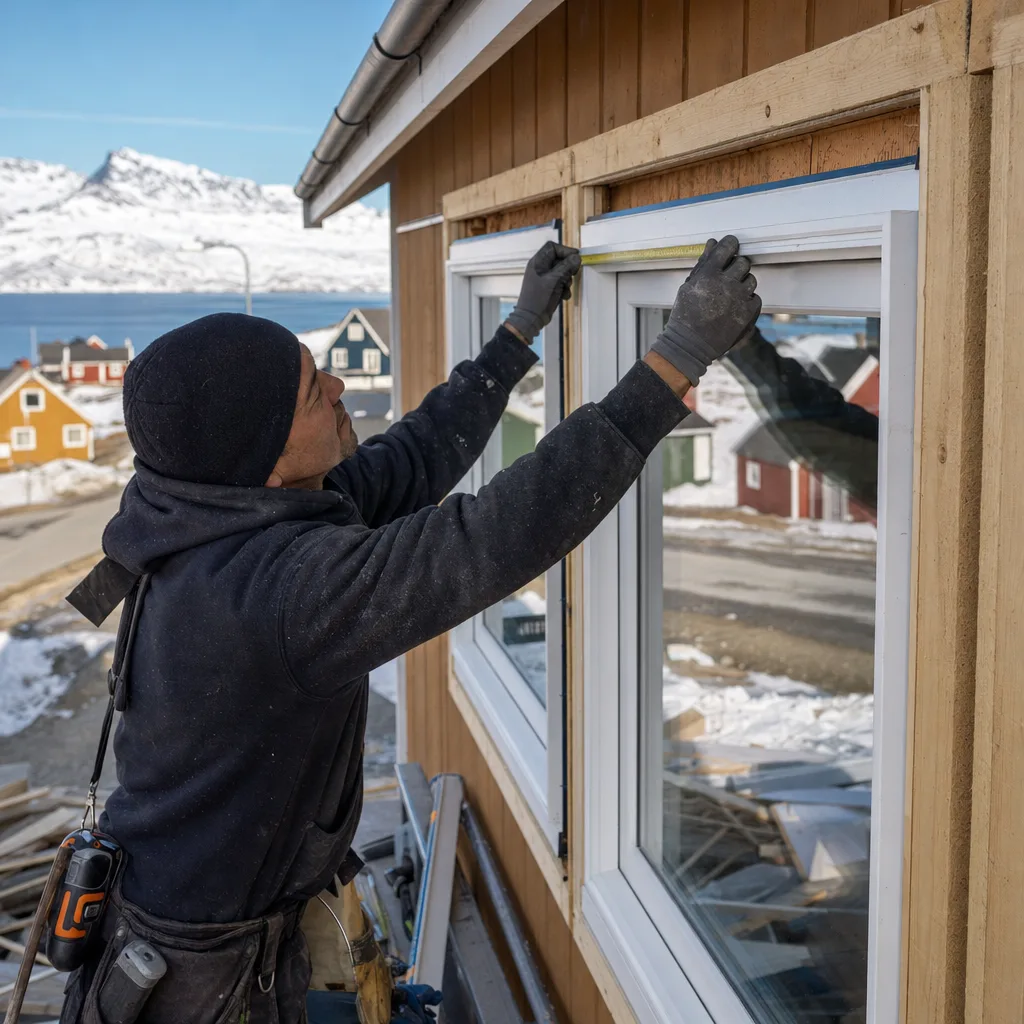
The carpentry profession in Greenland is less about “standard construction” and more about making houses and institutions withstand wind, frost, thaw, and salty air. You may end up with everything from roof and facade renovations to interior modifications, damage control after storms, and ongoing maintenance of homes and public buildings – often with tight logistical frameworks and materials that need to be ordered well in advance.
What tasks do carpenters encounter in Greenland?
Construction in the Arctic demands planning and craftsmanship. The climate affects both materials and methods, and many projects involve renovating and extending the lifespan of existing buildings.
- Renovation and maintenance: replacement of windows and doors, roofing, facades, insulation, interior walls, floors, and kitchens.
- Mold prevention and moisture: proper vapor barriers, ventilation, and detailed solutions around thermal bridges – small mistakes can become costly.
- Storm and water damage: emergency covering, repairs, and reconstruction, especially during periods of severe weather.
- New construction and extensions: single-family homes, townhouses, institutions, smaller commercial buildings – often with a focus on energy improvements and robustness.
- Special tasks: fire separations, sound requirements, assembly tasks, fixtures, stairs, and adjustments when “standard measurements” do not fit reality.
In practice, you are often more all-round than in Denmark. In smaller places, a carpenter may also assist with coordination, ordering, and practical solutions on the construction site, as there may not necessarily be a large team of specialists available.
Where are carpentry jobs – and who hires?
There are both private contractors and public employers, but much construction and operation are closely linked to the public sector and its partners. In larger cities like Nuuk, Sisimiut, Ilulissat, Qaqortoq, and Aasiaat, there are typically more projects underway, while smaller towns and settlements may have more seasonal needs.
- Contractor and construction companies: renovation, new construction, service agreements, and insurance tasks.
- Municipalities and public institutions: operation and maintenance of schools, daycare centers, housing, and other municipal buildings.
- Housing and property management: tasks in and around housing stock and ongoing renovations (often in collaboration with external craftsmen).
A good first step is to look at both current postings and employers: see all available positions in Greenland and get an overview of companies in Greenland, so you can target your application and contact relevant firms directly.
Requirements, experience, and practical paperwork
As a starting point, you are strongest with a completed carpentry education and documented experience. Many employers emphasize that you can work independently, think in solutions, and maintain quality – even when deliveries are delayed or the weather changes the plan.
- Professionalism: a journeyman's certificate is often an advantage; experience with renovation, roofing, windows, moisture/insulation, and finish is highly valued.
- Driver's license: may be necessary depending on tasks and shift arrangements.
- Safety: expect requirements for PPE and proper work at heights, on slippery surfaces, and in cold conditions.
- Language: Danish is used in many places on the construction site, but Greenlandic is a clear advantage in everyday life and in smaller communities; English can help in mixed teams.
Working conditions and obligations follow Greenlandic regulations. Before you sign, it is wise to understand the framework for working hours, working environment, and responsibilities. Also read what changes in Greenland's working environment law mean for you, so you know what to expect – and what is expected of you.
Everyday life on the construction site: weather, logistics, and collaboration
What many underestimate about construction in Greenland is the logistics. Materials often arrive by ship or plane, and this means that incorrect orders or missing small items can cost days. You will need to plan, create realistic phase plans, and find alternatives when the “standard solution” cannot be obtained in time.
- Season and daylight: winter brings cold and slippery conditions; summer can be busy with many projects and tight deadlines.
- Weather stoppage: wind and precipitation can halt outdoor work; flexibility and good indoor tasks are invaluable.
- Quality in details: sealing, fittings, transition solutions, and proper insulation are crucial for durability.
- Team spirit: in smaller teams, collaboration, communication, and helpfulness become part of the professionalism.
You may find that your role shifts between carpenter, problem solver, and coordinator. For many, this is precisely what makes a carpentry job in Greenland attractive: you see the impact of your work immediately, and your efforts matter to the community.
Housing, travel, finances, and settling in
Conditions vary greatly from employer to employer – and from town to town. Some positions recruit from outside and may include temporary housing (free or provided), travel conditions, and any rotation arrangements, while others assume that you will find housing and settle in on your own. Ask about housing type, rent, furnishing, utilities, and binding period before you accept.
Taxes, deductions, and practical matters may also differ from what you know from home. If you are considering moving permanently or for a longer period, read the guide to working in Greenland and use it as a checklist for contracts, registration, insurance, and everyday finances.
The social aspect plays a larger role than many think. In Nuuk, there is more urban life and more offerings, while places like Ilulissat, Sisimiut, Qaqortoq, and Aasiaat can feel closer and more manageable – and in smaller towns, you quickly get to know people. If you thrive in nature, peace, and a community where people notice each other, you often settle in faster.
Next steps: how to find the right match
- Choose a framework: do you want larger construction sites in Nuuk, or a smaller team in a town where you have broader responsibilities?
- Make your CV concrete: highlight roofing, windows, renovation, moisture/insulation, service tasks, and experience with independent planning.
- Ask questions before you say yes: housing, travel, tools/machines, working hours, overtime, winter conditions, and expectations for readiness/emergency tasks.
See current carpentry jobs and related positions at HireMe.gl, and keep an eye on postings in the towns where you can realistically find housing and a daily life that suits you.