

Greenland's working environment law: what the changes mean for you
22 July 2023
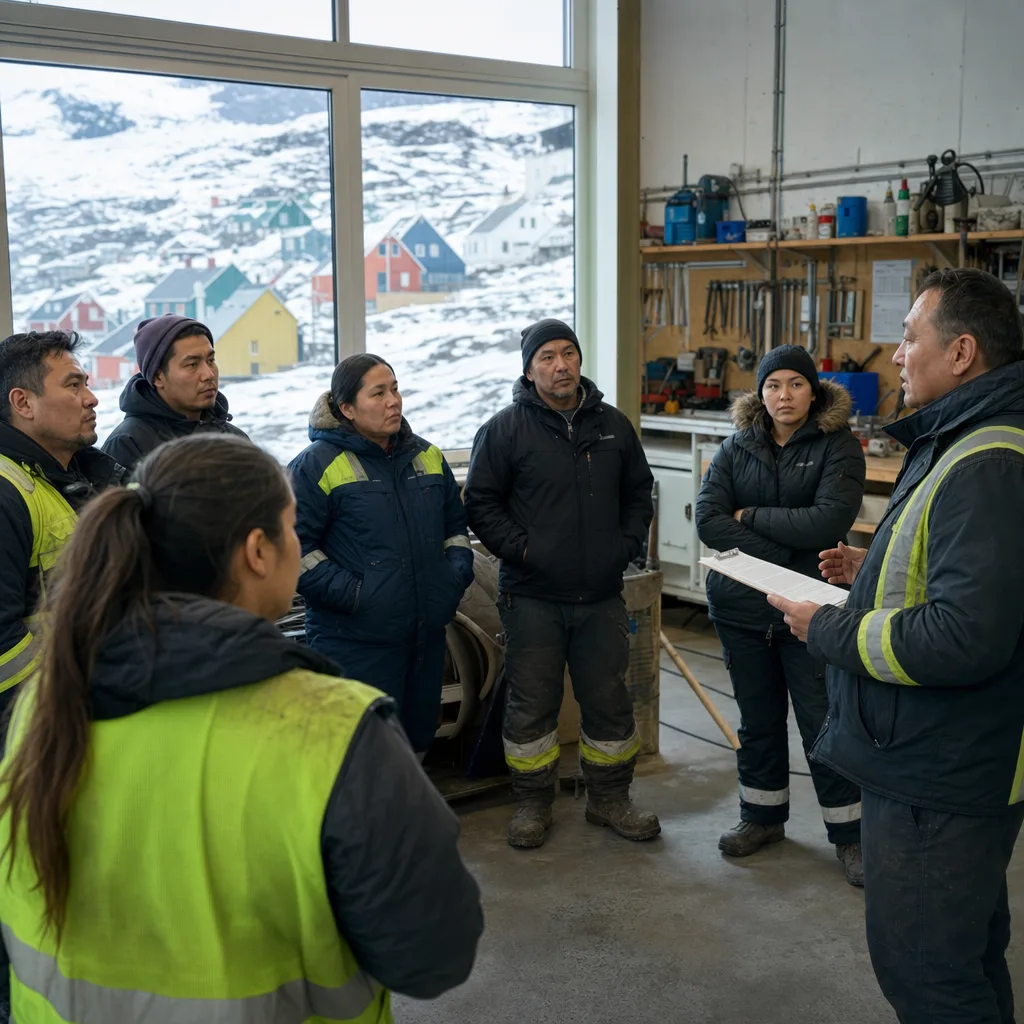
Greenland's working environment law has undergone significant changes, and it is not just about the law: it affects everyday life in workplaces across the country – from construction sites in Nuuk to schools in Sisimiut, nursing homes in Ilulissat, and port areas in Aasiaat and Qaqortoq.
What does the working environment law cover in practice?
Working environment is about more than safety helmets. In a Greenlandic context, especially three things fill everyday life:
- Safety and health: prevention of accidents, instruction, use of aids, ergonomics, and handling of hazardous substances.
- Mental working environment: tone of communication, workload, conflicts, threats, and violence (relevant in, for example, the social sector, healthcare, and service jobs).
- Organization: how work is planned, who has responsibility, and how employees are involved in working environment efforts.
If you are looking into work in Greenland or jobs in Greenland, the working environment regulations are part of what determines how your workday will be: introduction, training, working hours, breaks, safety routines, and handling of stressful incidents.
The changes you typically notice as an employee
Legal changes and updated requirements often become visible in the form of new routines and clearer responsibilities. It can, for example, manifest itself like this:
- More systematic working environment efforts: more workplaces are working more consistently with risk assessment, follow-up on incidents, and plans for improvements.
- Clearer instruction and training: especially in jobs involving machines, vehicles, hand tools, chemicals, or work in cold and darkness.
- Increased focus on mental working environment: procedures for conflicts, harassment, threats, and violence – and support after incidents.
- Better documentation: you may more often encounter checklists, recording of near-misses, and written guidelines. It can feel bureaucratic, but is often what makes it possible to make corrections.
For many newcomers, it is a pleasant surprise when there is control over introduction, safety, and support – but the standard can vary between workplaces, industries, and cities. Ask about it early in a job interview.
If you are a leader or responsible: where does the responsibility lie?
The workplace's responsibility cannot be "delegated away," even though tasks can be distributed. In practice, this means that leaders and employers must be able to show that they are actively working with the working environment – not just reacting when something goes wrong.
In Greenland, many employers are public (e.g., the Self-Government, municipalities, and the healthcare system), but there are also private companies in construction, transport, tourism, trade, and operations. Regardless of type, it is a good idea to clarify:
- Who introduces new employees – and how long does the training take?
- How are incidents (accidents, threats, conflicts) handled – and who do you call?
- What courses/competencies are expected (e.g., first aid, fire, machine operator, chemical handling)?
- How is the work adapted to local conditions: weather, darkness, logistics, and distances?
If you want to get an idea of who typically hires in the larger cities and locally, you can start by looking at the overview of companies in Greenland.
Greenlandic conditions that make the working environment extra concrete
The working environment in Greenland is also geography. It imposes different requirements than in Denmark – especially outside the largest cities.
- Weather and terrain: slippery conditions, storms, cold, and changing light conditions affect both accident risk and fatigue. Expect focus on proper footwear, planning, and cancellation/postponement in bad weather.
- Transport and distances: travel between cities often occurs by plane or boat, and in case of illness/accidents, response time and evacuation may be different than you are used to at home.
- Small workplaces and close-knit communities: conflicts, well-being, and confidentiality carry a different weight when "everyone knows everyone." This is where clear guidelines and good leadership really matter.
- Housing and accommodation: during recruitment, there may be designated or temporary housing. This can affect the boundaries between work and leisure, especially if colleagues live close together. Agree on expectations early.
If you are considering moving, read What you need to know when moving to Greenland for work for a practical overview of everyday conditions you should be aware of.
How to use knowledge about the working environment when applying for jobs in Greenland
You do not need to memorize legal texts. You can get far by asking specific questions and being attentive to signals in the job posting and conversation.
Questions that quickly reveal the level
- What does the introduction process look like in the first weeks?
- What risks are prominent in your workplace (e.g., lone working, heavy lifting, conflict situations, machines)?
- What do you do if an employee is exposed to threats, violence, or serious incidents?
- Is there a fixed time for sparring, supervision, or professional follow-up (relevant in care and social work jobs)?
Signs that things are under control
- The job posting describes training, team structure, and contact person.
- There is open discussion about stressors – and what is done about them.
- There are clear procedures for safety, transport, and emergency preparedness.
If you are completely in the starting phase, guide: working in Greenland provides a good overview of rules, practices, and everyday expectations.
Next steps
If you want to see what opportunities are available right now, go directly to see all available positions in Greenland and read the postings with a focus on introduction, working environment, and the conditions in the city you are considering.