

Work as a SOSU assistant in Greenland: tasks and conditions
19 October 2026
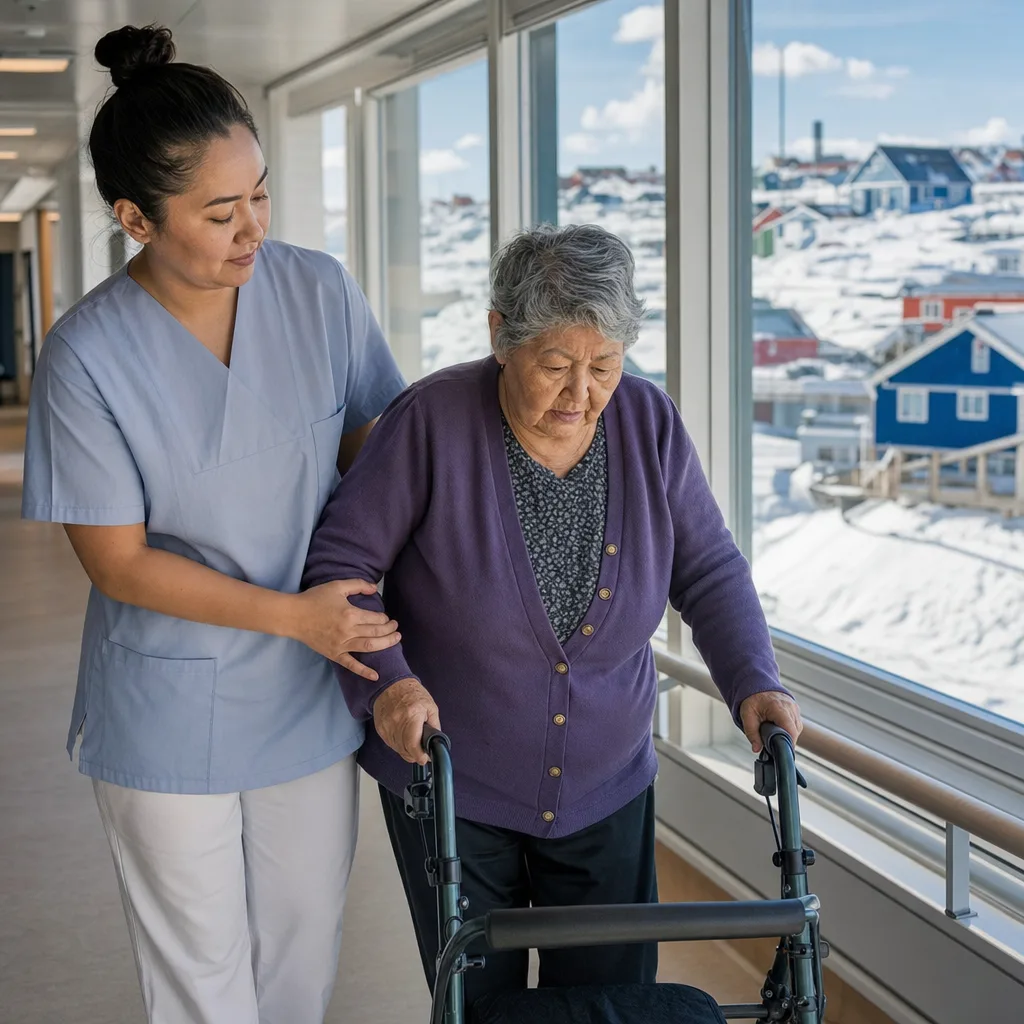
SOSU assistants are an important part of everyday life in both elderly care and parts of the healthcare system in Greenland. The role may resemble that in Denmark – but you will often have more responsibility, work in smaller teams, and need to thrive with distances, weather, and a close-knit community.
Where SOSU assistants typically work
Most care jobs in Greenland are in the public sector. This means that employers are often the municipalities and the healthcare system, and that the frameworks can be more uniform than if the market were dominated by private actors.
- Elderly care and home care: Assistance in the citizen's own home, personal care, practical help, observation, and documentation.
- Nursing homes and housing communities: Care, rehabilitative efforts, medication management (where delegated), collaboration with nurses and therapists.
- Healthcare system: In some places, SOSU assistants are involved in tasks related to patient care, basic clinical observations, and logistics – depending on local needs and competencies.
- Smaller towns and settlements: The tasks can become broader because there are fewer hands. You work closely with colleagues and must be able to switch between care, practical tasks, and coordination.
In larger cities like Nuuk, Sisimiut, Ilulissat, Qaqortoq, and Aasiaat, there is typically more specialization and more colleagues to collaborate with. In smaller places, your everyday life can become more versatile – and more unpredictable.
Tasks in practice: what you actually do
If you search for “social and health assistant Greenland” or “sosu Greenland,” you are likely looking for a realistic idea of the tasks. Here is what many encounter in practice:
- Personal care and mobilization: Support for bathing, dressing, transfers, nutrition, and prevention of pressure sores.
- Observation and professional assessment: Be the one who notices changes in functional level, pain, signs of infection, or dehydration – and acts on it.
- Medication management: Often according to local guidelines and delegation. Be prepared for practices to vary between workplaces.
- Documentation: Recording and reporting are part of everyday life, even when the pace is high.
- Collaboration with relatives: In small communities, people know each other. This builds trust – and requires clear boundaries and good communication.
- Interdisciplinary collaboration: Interaction with nurses, therapists, doctors, home helpers, and management, often with short decision-making paths.
You must especially thrive on taking responsibility, prioritizing, and keeping a cool head when the weather, staffing, or emergency situations change the plan.
Education, authorization, and language: what is required?
As a starting point, you must have a relevant SOSU assistant education to be considered. The requirements may depend on whether the position is in municipal elderly care or closer to healthcare tasks.
Authorization and formalities
Some functions may require authorization or special competency certificates, while other tasks are solved through training, delegation, and local instructions. Always check the specific job posting: there may be differences in what is expected in Nuuk versus smaller units.
Language in everyday life
Danish is used in many places as the working language, but Greenlandic often plays a significant role in citizen contact – especially in home care and in smaller communities. You do not always need to be fluent in Greenlandic from day one, but you should be prepared to learn key words, show respect for the language, and work with communication that works for the citizen.
If you are unsure about the framework for jobs in Greenland in general (contract, tax, practical matters), use the short guide to working in Greenland as an overview before you apply.
Terms, housing, and practical realities
Terms can vary greatly – both between employers and between cities. Some recruitment processes include housing or assist with designated housing, while others expect you to secure something yourself. This is a key point, as the housing market, especially in Nuuk, can be tight.
- Working hours: Shifting shifts are common. In small teams, you may experience that flexibility is highly valued.
- Travel and commencement: There may be practical coordination regarding flights, luggage, and start dates – especially if you are moving from Denmark.
- Housing and furniture: Ask specifically: Is the housing furnished? What about internet, electricity/heating, and deposit? When must it be vacated upon job termination?
- Economy and tax: Tax conditions and deductions may be different than in Denmark. Get it clearly written into the contract, and ask questions before you say yes.
Tip before you sign: Ask for the principles of the duty roster, introduction process, and expectations for independence to be described. This makes the transition to “care job Greenland” significantly easier.
If you want to orient yourself about who is hiring broadly, you can also look at companies and public employers in Greenland to understand the landscape.
Everyday life outside of work: climate, community, and family
Greenland feels closer than Denmark – not in kilometers, but in relationships. You quickly become a familiar face, and this can be both comforting and demanding. Additionally, the weather affects logistics: storms, snow, and the dark season can change plans, even when you are off duty.
- The social aspect: Many develop a strong collegial community because you rely on each other in everyday life.
- Nature and breaks: For many, nature is a significant part of quality of life – but remember that outings require respect for weather and safety.
- If you move with family: Schools, childcare, and leisure look different from town to town, and it is wise to investigate this early.
If you are considering bringing children, the guide to moving to Greenland with family is a good place to start before you make a decision.
How to get started: concrete next steps
- Choose geography first: Big city like Nuuk or medium-sized town like Sisimiut/Ilulissat – or a smaller place with broader tasks?
- Read postings as a checklist: Look for requirements for education, language, medication delegation, rotation, and housing.
- Prepare questions: Introduction, staffing, shift load, housing conditions, travel, contract length, and termination.
- Get agreements in writing: Especially regarding housing, return travel, and what happens in case of illness or unforeseen circumstances.
See current opportunities by starting with all available positions in Greenland and filter by the social and health sector.