

Moving to Greenland with family: school, childcare, and everyday life
14 September 2026
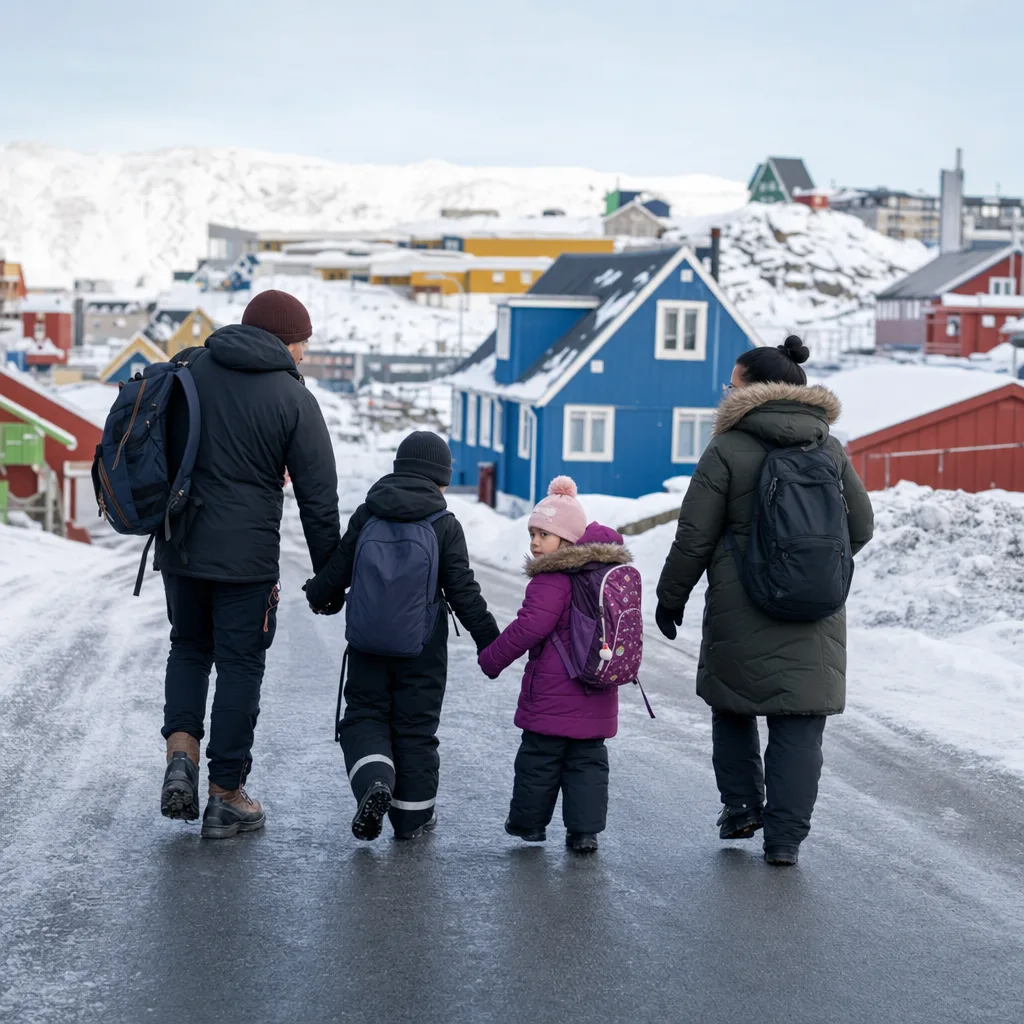
What typically determines whether a move to Greenland works for a family is not the adventure – but the everyday life: where the child goes to school, who picks them up, whether the partner can find a job, and how you make everyday life work in a smaller community.
School in Greenland as a newcomer: this is how it works
The public school is called Atuarfitsialak, and the teaching takes place depending on location and grade level in Greenlandic and/or Danish. In larger cities like Nuuk, Sisimiut, Ilulissat, Aasiaat, and Qaqortoq, there is usually more experience with newcomers, which can make the transition easier, especially if the child comes from a Danish school.
As a newcomer, it is a good idea to clarify three things early:
- Language and support: Which language of instruction suits the child best right now, and is there support in Danish or Greenlandic as a second language?
- School start and grade level: How is the child placed when switching in the middle of the school year, and what documentation does the school require (latest reports/grades, special needs, etc.)?
- After-school care/leisure: What does after-school care look like locally, and what are the opening hours in practice?
The municipalities handle enrollment and care, and rules and capacity can vary from city to city. Ask specifically about waiting lists, opening hours, and holiday periods – especially if both of you need to work from day one.
Daycare and care: nursery, kindergarten, and everyday logistics
For the youngest, it is often the opening hours and stability of care that matter most. In some periods, recruitment and illness can affect staffing in institutions, and then opening hours may be adjusted. This is not to scare you, but to help you plan realistically: Have a plan B if you have jobs with early shifts, travel activities, or irregular working hours.
Ask the institution/municipality about:
- Adjustment period: How much time you should allocate before full care functions.
- Food arrangements and equipment: Whether there is food at the institution, and what the child needs to bring.
- Closure days and holidays: How this is handled locally, and whether there is emergency care.
In larger cities, there may be more options to choose from. In smaller towns, however, there may be shorter distances and a closer community, which for many families provides more peace in everyday life.
Job for the partner: this is how you increase the chances of both thriving
Many moves succeed or fail based on whether the partner also lands well. Greenland has a job market where the public sector plays a significant role, but there are also private employers – and the opportunities look different in Nuuk compared to smaller towns.
Start by clarifying what type of job is realistic in the city you are looking at. Typical tracks for accompanying partners can be administration, trade, logistics, crafts, service, cleaning, kitchen, tourism – and positions in schools and daycare if one has a relevant background. Some professions require Danish/Greenlandic authorization or local approval, so check the requirements before planning the finances around a specific position.
- Use the overview: Look at see all available positions in Greenland and filter by city and field.
- Understand the terms: Read the guide to working in Greenland to get a grip on housing, contracts, travel, and practical matters.
- Find employers: Use the overview of companies in Greenland to form a realistic picture of who hires locally.
If one gets a recruitment position with assigned or free housing, it can make a big difference. But this is not something one can count on in all job types, and terms depend on the employer and collective agreement. Agree early on how you will handle it if the partner's job comes only after 1–3 months.
Housing, finances, and distances: what families often underestimate
Housing is one of the biggest practical challenges for families with children. In some positions, housing is included, while others require you to find something yourself. The market can be tight at times – especially in Nuuk – and it affects everything from school choices to finances.
Three things are worth keeping in mind before you say yes:
- Size and location of the housing: Being close to school/daycare can mean more than “central.” Wind, snow, and darkness make transport with small children more demanding.
- Travel and networks: Distances are not kilometers, but flights, weather, and time. Visits to family in Denmark may require planning and budgeting.
- Equipment and prices: Some goods may be more expensive and selection smaller. Plan sensibly: winter clothes, footwear, and practical children's equipment are not areas to improvise.
Create a “daily budget” based on your specific city: rent, daycare, transport, and travel. And be honest about what happens if one income drops out for a period.
Everyday life with children: community, nature, and the social
Greenland can be a strong place to have children because nature is close by, and because communities in many towns are manageable. It can feel safe, but also intense: you are seen, and you are often “the new ones” for a while.
It helps to actively seek out communities:
- School and institution: Participate in parent meetings, events, and practical joint tasks where you get to know each other.
- Leisure life: Ask locally about sports, music, scouting, sailing, skiing, or other activities – the offerings vary greatly from place to place.
- Language in everyday life: If you do not speak Greenlandic, be open about it and learn the basics. Small phrases can make a big difference in contact with other families.
The dark season and winter may require new routines: more planned outdoor activities, light in the home, fixed agreements, and a focus on well-being. In return, many experience that the family gets more time together because temptations and travel time are less than in larger countries.
Concrete next steps before you decide
- Choose 1–2 possible cities: Nuuk offers a broader job market; Sisimiut, Ilulissat, Aasiaat, Qaqortoq, etc. can provide a more manageable everyday life – but fewer job opportunities.
- Contact schools and daycare early: Ask about grade levels, language, support, opening hours, and start dates.
- Clarify job and housing in the same conversation: Especially if you are moving with children. Get the terms in writing.
- Plan the “first 8 weeks”: Adjustment, networking, shopping, dark season/winter clothes, and who can be flexible.
- Read up on pitfalls: The article Jobs in Greenland: what you need to know before you move is a good reality check of the practicalities.
If you want to see what is actually open right now – both in the larger cities and outside – take a look at the current postings on HireMe.gl via the overview of available positions.