

Job in IT in Aasiaat, Qasigiannguit, Kangaatsiaq, and Qeqertarsuaq
10 January 2026
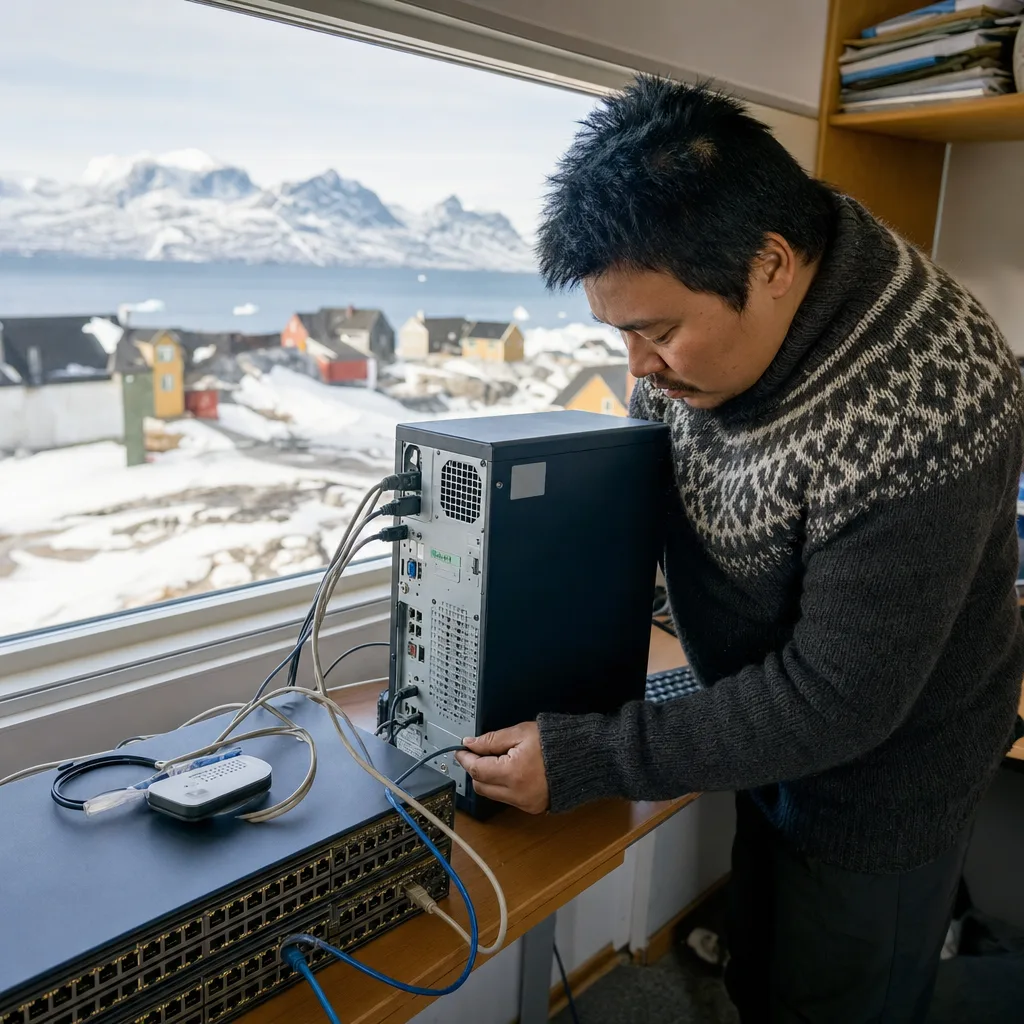
IT jobs in Aasiaat, Qasigiannguit, Kangaatsiaq, and Qeqertarsuaq rarely involve "just" code. You often become the one who makes everyday life work: networking, user support, operations, equipment, security, and vendor contact — sometimes with long distances and few hands for the task.
What IT positions are typically found in the cities?
When people search for information technology Greenland or jobs in Greenland, they often look for a clear picture of job titles. In smaller job markets, the titles are broad, and the roles can be combined.
- IT supporter / helpdesk: 1st and 2nd line support, preparation of PCs, access management, printing and meeting room equipment, user guidance.
- System administrator / operations manager: users and permissions, patching, backup, monitoring, Microsoft 365/AD-like environments, documentation, and preparedness.
- Network technician: switch/router, Wi‑Fi, troubleshooting connections, contact with telecom/internet providers, setup in new locations.
- IT coordinator / digitization consultant: procurement and standards, vendor management, implementation of new systems, data security policies, training, and change management.
- Specialists (less commonly local): development, BI/data, information security, cloud architecture. They are typically found in larger organizations or as project hires.
Employers: public workplaces dominate
If you search for “qeqertalik job” or “job in Qeqertalik,” you will discover that many positions are located in and around public operations. This also applies to IT: Schools, administration, the care sector, and health functions need stable operations and support.
Typical employers can be municipal units, public institutions, and companies with local operations. Additionally, there are private businesses in trade, logistics, tourism, and construction, where the IT role is often hands-on and close to the business. If you want to get an overview of potential employers, you can see companies in Greenland.
City by city: what does it mean for IT everyday life?
The four cities have different sizes and rhythms. This affects how specialized the job is and how much you handle yourself.
- Aasiaat: More job opportunities and typically more structured functions. Here, there may often be a small team, so you are not alone with all operations. See available jobs in Aasiaat.
- Qasigiannguit: The tasks can be broader, and you quickly become “the one who knows IT.” This gives you significant influence but also requires you to prioritize and document.
- Kangaatsiaq: Smaller environment and a short distance to colleagues — but typically fewer resources. Remote support, planned maintenance, and robust solutions become important.
- Qeqertarsuaq: A unique seasonal rhythm and periods of more activity. As an IT employee, it is advantageous to think in terms of operational reliability and simple, stable standards.
Across the cities, one thing is constant: You must be able to explain technology in a language that makes sense to users, and you must keep a cool head when there is no specialist to call right around the corner.
Requirements, languages, and what employers typically look for
There is rarely one “right” match. Some positions require formal education, while others value documented experience, stability, and service ability.
- Professional background: IT supporter, data technician, relevant work experience, or another technical profile with practice in operations/support.
- Operational discipline: documentation, change management in practice (even on a small scale), backup/restore testing, rights management, and a plan for updates.
- Security: understanding of access control, phishing, device management, and handling personal data. Ask about responsibilities and frameworks in the position.
- Language: Danish is often used in writing and systems; Greenlandic is a significant advantage when interacting with citizens/users. Many workplaces functionally operate in two languages.
- Personal: patience, pedagogical support style, and the ability to work independently — especially when equipment or parts need to be ordered from outside.
Terms and realities you should clarify before saying yes
“Working in Greenland” can mean a daily life with a strong collegial community — and with logistics that must be taken seriously. Terms vary greatly depending on the employer and position, so read the posting carefully and ask about the details.
- Housing: During recruitment, there may be assigned or free housing, but this is not guaranteed. Get it clearly written into the agreement, including standards and expenses.
- Travel: Agree on how arrival and departure travel is handled and whether there is travel activity between cities.
- Onboarding: Ask who will hand over the tasks and whether documentation exists. In small IT functions, knowledge can otherwise disappear with one departure.
- Equipment and suppliers: Who has purchasing agreements? What is the delivery time for critical parts? What is the contingency plan if the network or internet fails?
- Taxes and practical matters: It is wise to familiarize yourself with the frameworks before you move. Read guide: working in Greenland and What you need to know when moving to Greenland for work.
Next steps: how to find the right postings
- Choose direction: Do you primarily want support/operations, or do you want to get into coordination/digitization? Then search accordingly.
- Look for “broad role”: Look for phrases like “versatile tasks,” “independent operations,” and “local support” — this typically means you will wear many hats.
- Ask specifically: Which systems? How many locations? Who do you escalate to? What is the expectation for availability outside normal working hours?
You can start by viewing all available positions in Greenland and filtering by city and IT-related titles to find the current opportunities.