

Transport in Greenland: planes, boats, and everyday logistics
26 October 2026
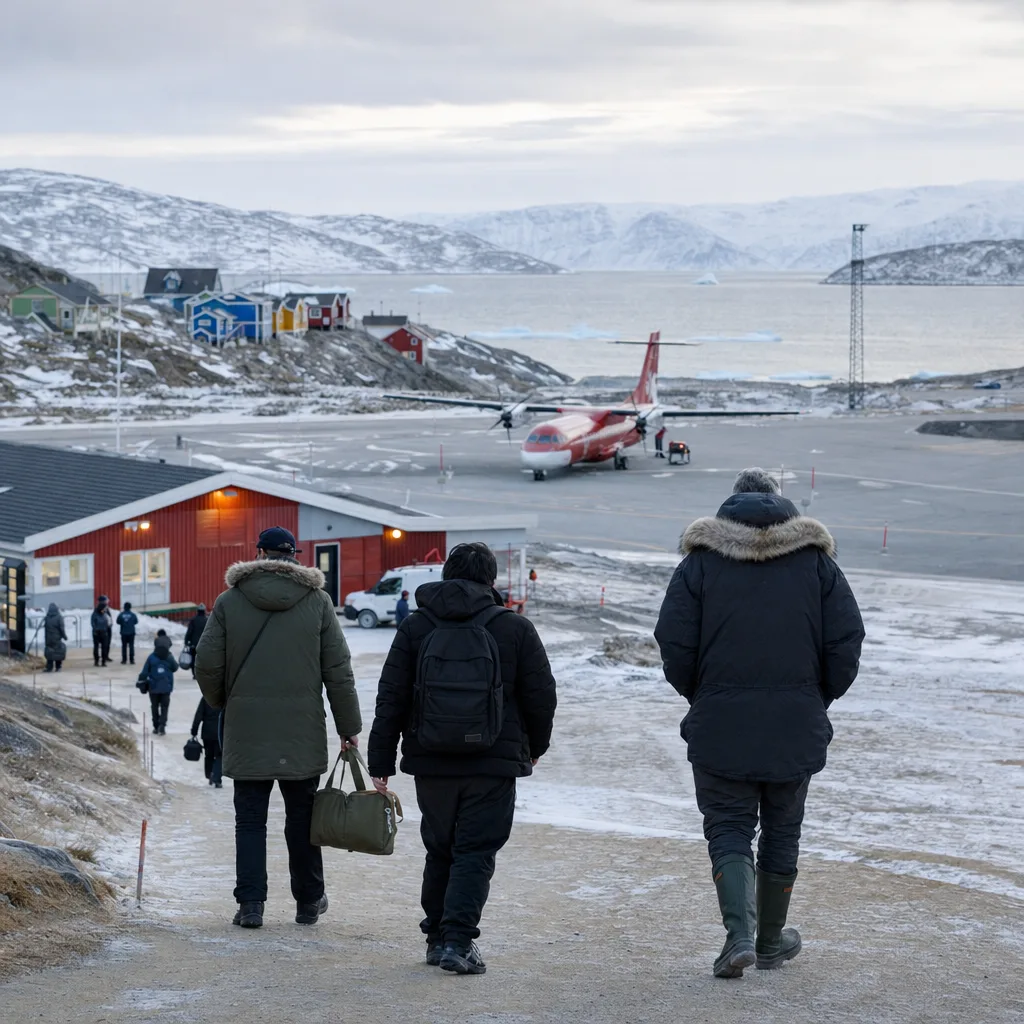
There are virtually no roads between the towns in Greenland. It sounds dramatic, but in practice, it just means that your everyday life is planned around flights, boats, weather, and fixed departures – and that “traveling between towns in Greenland” often resembles traveling between countries more than a weekend trip in Denmark. If you are considering living and working in Greenland, transportation is not a detail: it affects when you can show up, how you take time off, and how flexible you need to be.
How to get around: flights, helicopters, and coastal ships
Transportation in Greenland is broadly divided into three tracks: domestic flights and helicopters, sailing (speedboats and coastal ships), and local transport within the town/village itself.
- Flights between the larger towns are the most used for longer distances – especially between places like Nuuk, Sisimiut, Ilulissat, Aasiaat, and Qaqortoq (typically via hubs). For many job types, this is the solution that employers also expect when you need to attend a course, meeting, or temporary assignment.
- Helicopters are primarily used for smaller towns and villages, where there is not the same route flow. It can be part of the daily life for employees in, for example, health, social services, or operations, who visit multiple locations.
- Boats and coastal ships play a significant role – both as scheduled transport and as a “lifeline” when flying is difficult. In the summer, sailing is often the most stable way to move people and equipment along the coast, but it takes time.
The most important thing to understand: travel time is measured not only in kilometers but in departures, seasons, and weather.
The weather matters more than you think
“Fly Greenland” is practically as much about meteorology as it is about tickets. Fog, crosswinds, snow, and visibility can change plans quickly, and this also applies to boat traffic in bad weather or ice. As a new arrival, it is wise to prepare for the possibility that a trip may be postponed to the next day – or that you may have to take a different route than planned.
This affects the workday in two ways:
- Meeting stability across towns: If you need to go to Nuuk for a course or further out to a smaller destination, you may need to travel the day before and build in a buffer.
- Shift schedules and handovers: In positions with shift changes (e.g., health and operations), planning often includes extra leeway, and some workplaces have clear procedures for what happens if you get stuck due to weather.
Ask during hiring how the workplace handles delays: Do you have to rebook yourself? Do you have a travel coordinator? And what is the expectation if you get stuck in another town?
It matters for the job: commuting, business trips, and time off
In Denmark, one can commute between towns. In Greenland, most people live close to their workplace, and “commuting” between Nuuk and Sisimiut is not an everyday solution but a journey. This shapes working life, especially in the public sector, where employers are often the Self-Government, municipalities, and the healthcare system, and where meetings and tasks can span across the coast.
Typical situations where transportation plays a role:
- Business trips: Some roles involve visits to other towns/villages. This can range from supervision and teaching to technical tasks and project work.
- Shift and rotational work: In certain functions, one works in one place for periods and has time off in chunks. Here, planning for travel (and buffer days) becomes part of life.
- Holidays and family visits: “Popping home” for a weekend is rarely realistic. Many plan for longer time off and buy tickets well in advance.
If you are looking at the guide to working in Greenland, pay special attention to sections on contracts, housing, and practical conditions. Transportation is closely linked to how your employment is structured.
Everyday logistics in the towns: on foot, bus, and snowmobile
Once you arrive, everyday life is often simple. Many live within walking distance to work, shopping, and leisure activities – especially in the urban centers of Nuuk, Sisimiut, Ilulissat, Qaqortoq, and Aasiaat. Locally, there may be buses and taxis, but in smaller places, many manage on foot.
What can be surprising is the significance of the seasons:
- Winter: Slippery sidewalks, dark periods, and the need for proper footwear. In some places, snowmobile transport is significant outside the town.
- Summer: More activity on the water, more opportunities for excursions and sailing, and often easier to move equipment.
Newcomers often find that their daily life becomes more manageable by living close to work rather than chasing “the perfect view.” Travel time in everyday life can be minimal, but only if you live correctly.
Concrete advice before you say yes to a job
Transportation is easiest to manage when you clarify expectations early. Use these questions when talking to an employer or reading a job posting:
- Are there business trips? How often, to which places, and is it primarily by plane or boat?
- Who pays and books? Some workplaces book everything, while others expect you to do it according to guidelines.
- What happens in case of weather delays? Is there a fixed practice for accommodation, rebooking, and working hours?
- When do you need to be in the country? If you are coming from Denmark or abroad, it may be wise to arrive with a buffer before your first working day.
- Is the position seasonal? Some jobs are closely tied to summer activities or winter operations. Also, see Seasonal work and short-term jobs in Greenland: here's how to find them.
If you want to get an overview of employers and industries, you can also look at companies in Greenland and note whether the job is tied to one town or covers multiple locations.
Next steps: find positions and read transport conditions carefully
Transportation in Greenland quickly becomes quite normal when you learn the rhythm of departures, weather, and seasons. Start by finding relevant postings and especially read sections about travel activity, start dates, and any assignments. You can see current opportunities at view all available positions in Greenland.